THE TERRACE by John McKenzie
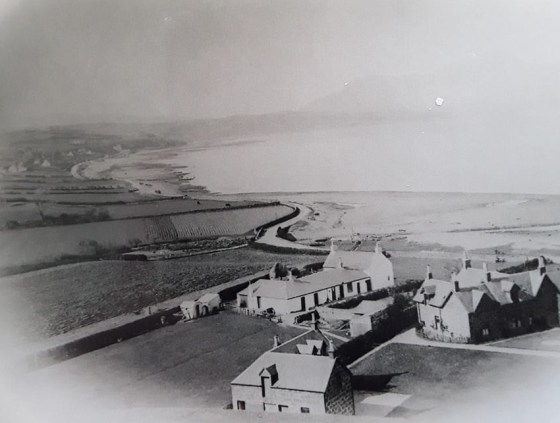
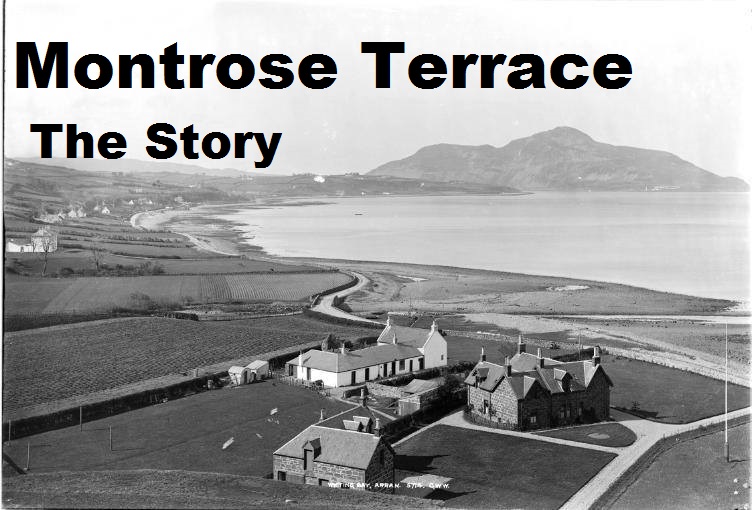
The row of houses lay at the southern end of the village, running at right angles to the shore and consisted, initially, of twelve homes. The earlier built group, furthest from the sea, was called “The Crudens”, named after the building firm who erected them. This set of dwellings did indeed have a terrace of four but the topmost pair were semi-detached, as were the other six houses in the group which made up Montrose Terrace, my home from 1953 until 1966 and again from time to time in later years when failure and retreat required a safe haven. The “Terrace” was to be the centre of my childhood, the great teacher and unlimited fountain of knowledge, a combination of place and people that would nurture me through this first and formative period.
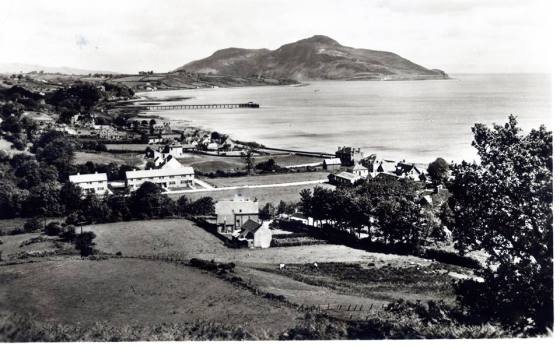
Our house, No 6, was at the end of the newer group of houses and had a position in the street that was the envy of all. The road and pavement ran the full length of the “terrace” but a second road ran alongside our garden which gave the “Crudens” access to their back doors, presumably to allow dirty footed working fathers to enter through the kitchen door rather than the hall. All the men in the street used this path of entrance after their day’s toil, probably after some secret agreement between their wives, shouted between drying greens during the early days of setting up their new homes, and whilst the same men were absent from the discussion.
This location gave No.6 a larger garden than the others and an important division between us and the second rate “Crudens”. The Crudens were larger houses but “hadn’t been finished properly”, according to my mother, in agreement with the other six in our, newer group. Within days of these families moving in to their new nests a pecking order had been created, at least in their own heads. The men of course, were oblivious to this fact but the children, with ears like bats, already had this knowledge firmly implanted in their rapidly expanding brains, misunderstood, but still fact.
The first six houses in the “Terrace” were of an entirely different design from their earlier constructed neighbours and had a quaint country style about them which the Crudens did not. The steep sloping roofs of our type came all the way down to just above the front door, giving them a “chalet” sort of appearance which fitted in with the slope of the hills opposite which were no more than one hundred yards away. The Crudens, on the other hand, were tall, straight faced and regular creations, very much box-like and characterless with high inaccessible tiled roofs, better suited to the industrial towns of the mainland. Our grey-black slated buildings reflected the sunlight like giant mirrors and in the rain they looked somehow softer and more comforting than their counterparts further up the street. I was glad to live in the nicer version and felt quite sorry for the people who had to exist in the cheaper, dowdier looking things that “hadn’t been finished properly”.
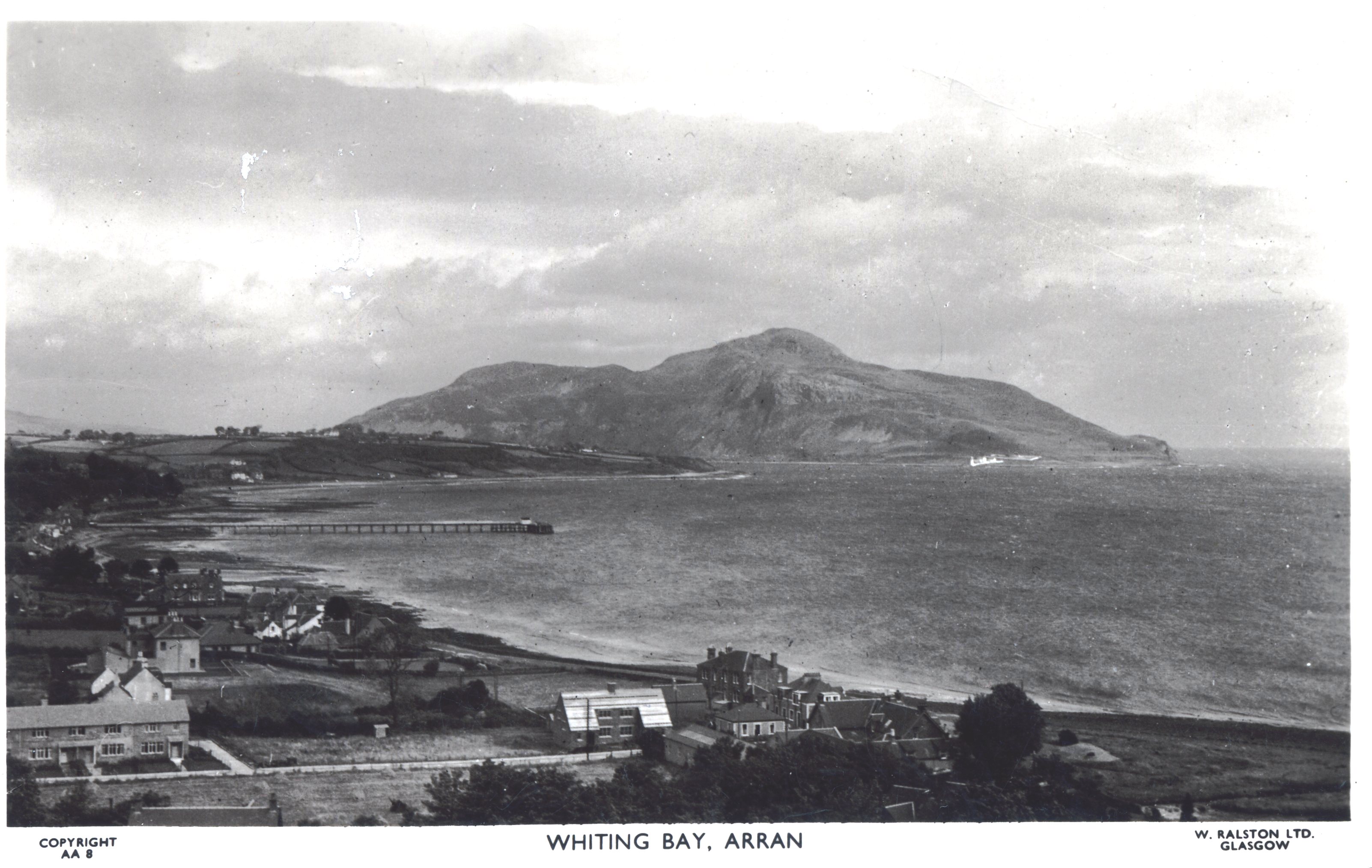
The road along the front of our houses set us apart from the rest of the village. It was made of concrete and had been laid in sections separated by thin strips of tar, which stretched across its full width. In later years they would function as goal lines for a revised version of “headie” and as starting grids for bike and cart racing but initially the tar strips were used solely for digging into with used lollypop sticks on hot summer days, the results of which meant that contaminated skin on knees and faces had to be treated with butter to remove the evil black substance, never completely. It still amazes me how a mother, not necessarily your own, armed with a soft cloth and some butter can be so violent and be able to say so much in such a short space of time. I don’t think we had much understanding of the language of mothers, then, because the same procedure would be gone through several times during the course of one hot summer. The tar digging stopped when we tried to find out the depth of it by hammering our sticks in until they disappeared. We presumed that it went down for miles since we had reached the end of our measured perception and for some reason there seemed no point in further experiment.
The road was bounded by a pavement on one side, built from slabs of concrete just the right shape and size for playing “peevers”, and was the only pavement in the village at that time.
No child was ever seen walking on the lines between the slabs. Even running, late, for the school bus had to be carried out in a series of rapid jumps. As the years passed, great thick soft chunks of moss grew in the spaces between the slabs and provided yet another treasure for digging, the object being to remove one whole line of the material without breaking it and carry it back to your garden for further study. This was only achieved once to perfection and became the first precedent of skill which we all tried to emulate.
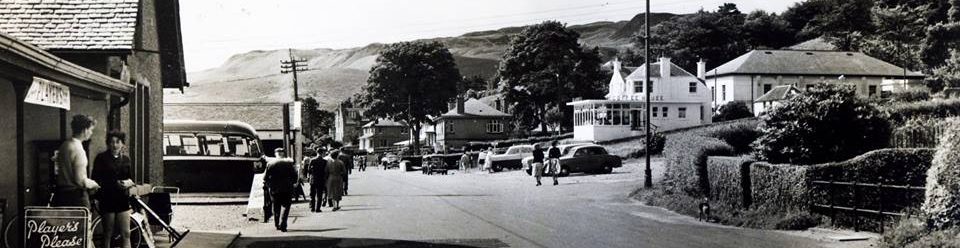
This playground highway curved slightly as it left the main road through the village, which itself ran virtually along the seafront, hugging the natural tide eaten curves. The Terrace dipped slightly in the centre, almost back down to sea level, rising again a few feet over its length, only really noticeable when riding a bike or pushing a cart. This natural geographical feature became very important during weather extremes such as heavy rain or snow, as these substances congregated in the lower lying area in the centre, giving endless hours of fun to scientifically minded heads. When the sea flood came, we were glad to be at a higher point in the street as our gardens escaped the damage .Mr. Burke at No. 2 said that he caught “four big Haddies” out of his kitchen window that day, but we never saw them as he had eaten them for his breakfast.
Just beyond the top of the Terrace the Glenashdale Burn took a sharp curve, which in some circumstances of very heavy rain and high tide, would overflow its bank, sending torrents of water rushing down the road on an alternative route to the sea. Attempting to build a dam to stem this flow was always very exciting but totally useless and usually made Mrs. McBride at No. 7 shake her fists from her window as she saw the water diverted up the back road and into her side garden.
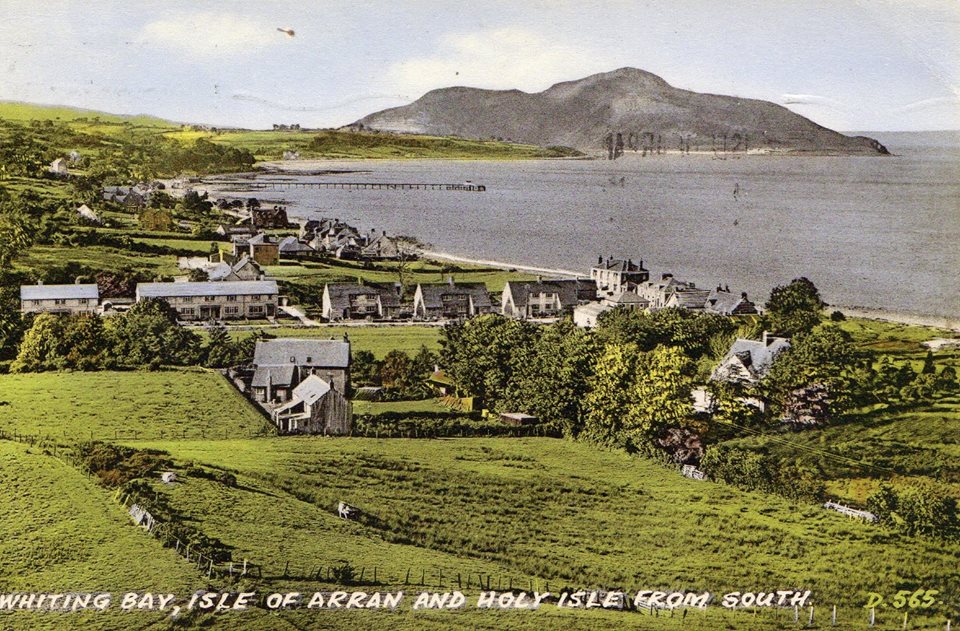
The children in these houses cared for their road and looked after it with passion, clearing away flood debris and stones and, more importantly, lifting the drain covers and clearing the pipes with long pieces of stick at any opportunity. Money could be found in the silt at the bottom of these holes, if you took the right amount of care looking for it. The road remained in the same condition for all the years that we lived there, a soft, clean white track which was only to deteriorate once we grew up and left home. The next generation of children didn’t have the same interest in keeping it as new.
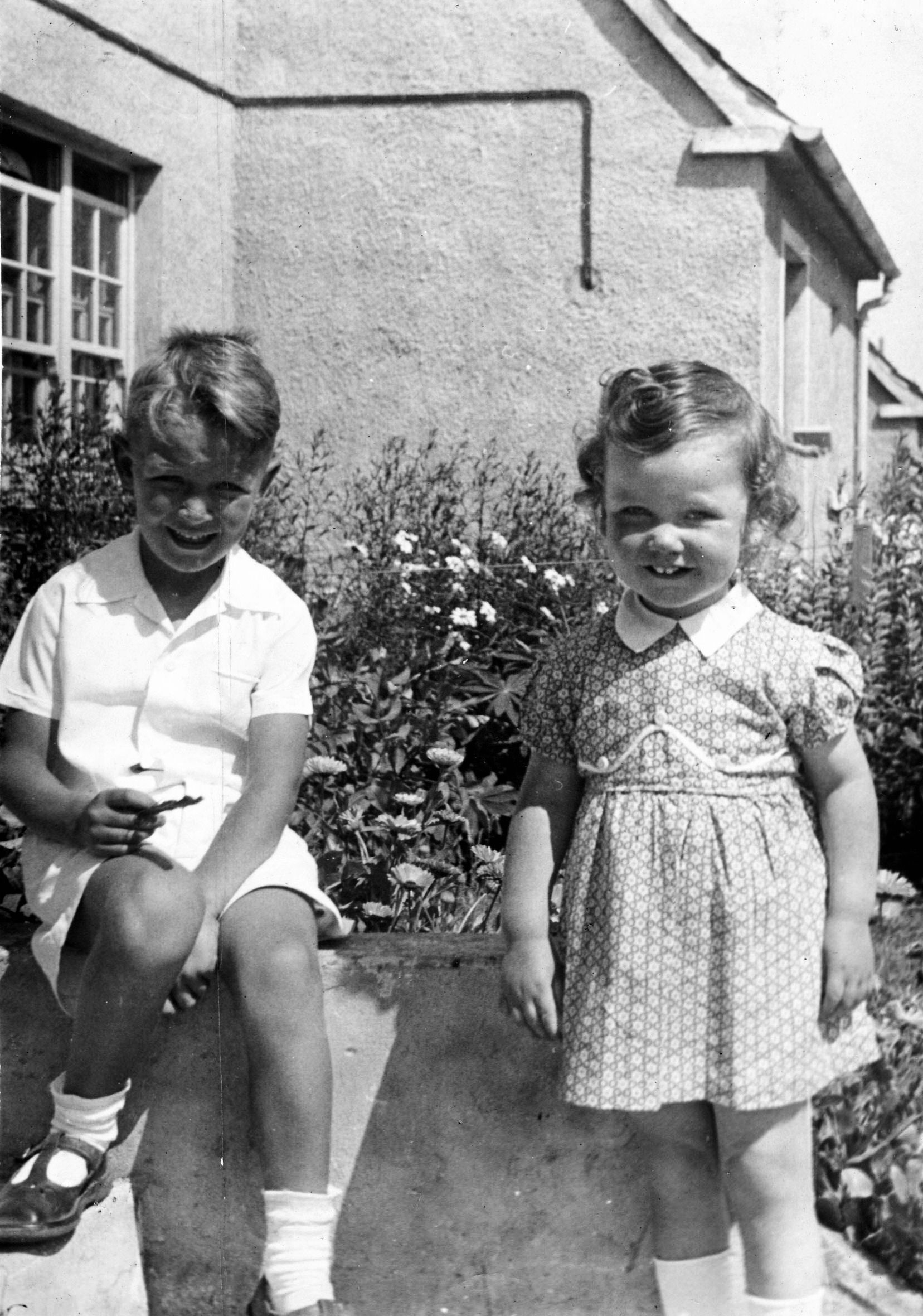
The twelve council houses were not the only buildings in the street. At the foot of the road, on the same side, were a further two houses, belonging to the Millers ,one a fairly grand looking semi -detached which faced the sea, the other a smaller annex cottage which faced onto our road. Opposite them sprawled Coopers shop van garage, storerooms and paraffin barrels.
John and Margaret McKenzie
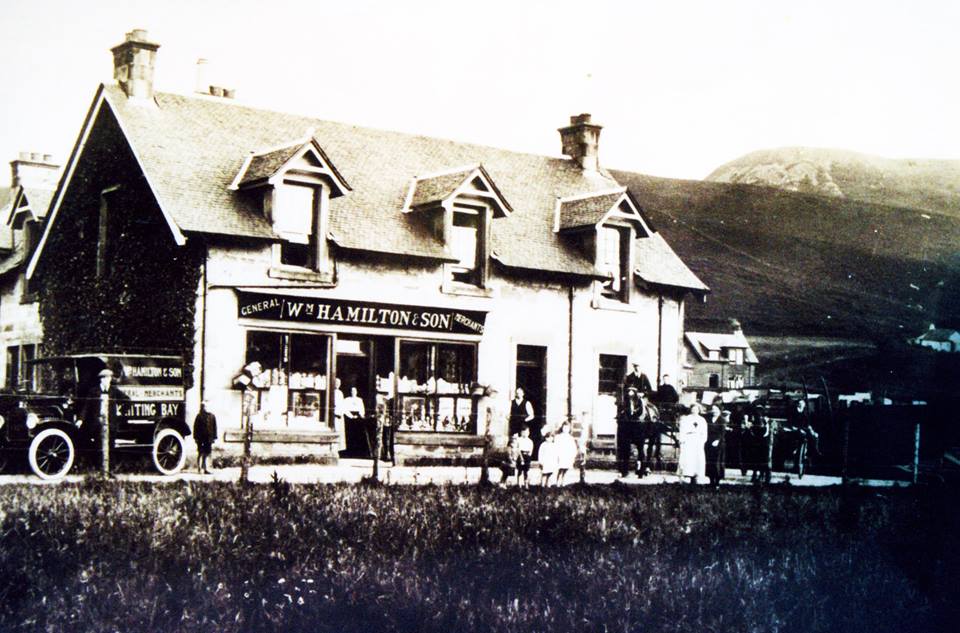
After the shop, on that side of the road and running the length of the terrace, was a neglected field which very soon became the sight of further council house building.
The peace and tranquillity of the setting, a safe little street in a normally quiet island village of only about two hundred inhabitants, betrayed its true excitement. Normally quiet, except in the summer months when the invasion of visitors from places like Glasgow and Paisley and England swelled the population and filled all the winter damp cottages to overflowing with brown legged boys and long haired girls of every shape and size. This place held a fatal attraction for these people, most of them still spending their holidays in the same place, long after their parents had found the pleasures of Majorca or Tenerife. They came here young and innocent and found the pleasures of life, again and again to return for another episode.
The Terrace was only the centre of the stage, around it lay the backdrops, the scenery, the, wings and the changing rooms, all ready to take on whatever form a little imagination could conjure up. The square mile around this centre contained almost every imaginable human experience; the dangers, the guilts, the truth, the lies, love, death, friendships, hatred, fear, pleasure and pain of every dimension, and all the other nice things about” growing Up” that anyone could think of. The people who lived here all year round gave a sense of stability: some of the visitors brought a different aspect of life into this complicated and exciting existence but never managed to improve its slow evolutionary magic. In truth, they learned more than they gave in return, for all of their worldly experience.
The people who lived in The Terrace, between them, held most of the answers to most of the secrets; some willing to share, some too busy and some too scared to tell. By a process of elimination it was nearly always possible to get the knowledge that we sought, and be quite certain of its truth. Some questions were never resolved during that time of learning but they never would be.
They were all simple living people, with ordinary jobs, no-one any better off than the other, the closest to the socialist ideal that any future experience exposed. Money had a limited life, lasting, after proportional allocations to different jars and envelopes, for six days at a maximum, more normally five. No-one borrowed money from anyone else to get to the end of the week. In the families of The Terrace all weeks finished on Wednesday or Thursday and the only help and assistance that could be given was limited to a cup of flour or half a cup of sugar, always returned on Saturday afternoon. It was a common sight to have as many as six children out on the street after three o’clock, all carrying little parcels to one another’s houses, each return being a little larger than the quantity borrowed. There must have been growth in this type of economy but it was not immediately obvious.
All simple living people, in a financial sense, not, however, as individual minds. Each person was unique and deliberately contributed their own brushstrokes to the canvass, proud of their own identity and position in the community. When the mum’s talked outside, they laughed out loud at secret humour shared, their noises giving comfort to the playing children all around them, none of whom understood the ecstasy being expressed or the words being spoken. The comfort of a happy mother did not need explaining, the effect in your head said it all.
The men would speak as they bent sweating with spades, only a fencepost apart, always rushing to complete the job before the other and eager to find the next task started before the day grew dark. They spoke of Tobruk and “Alex”, bully beef, and their first sergeants power. They did not speak out loud about killing other men only a few years before, even though they all had. They were not proud of that act but were of being part of the machine that mobilised. They spoke of engines as big as car and cannon straffing and “Monty” , then De-Mob and the journey home via Preston .They would then stand up straight as taught by their sergeants and wait for the other to say “By goad, this is thirsty work,ma thrapples needin a wet, dae yae fancy a haulf before oor tea’
A great flurry of activity would take place as the Ne’erday whisky bottle was found at the back of the larder and generous portions allocated to small tumblers. One of us would be sent out the back door to go and tell the other wife that her man was safe and well and would be home in a minute or two.
“Och, he’s a dampt pest, tell your mum, tell him to get back in here or he’ll get what for”, would be a typical response to this information.”
We never did relay these replies, it didn’t seem right somehow.
John Mackenzie.
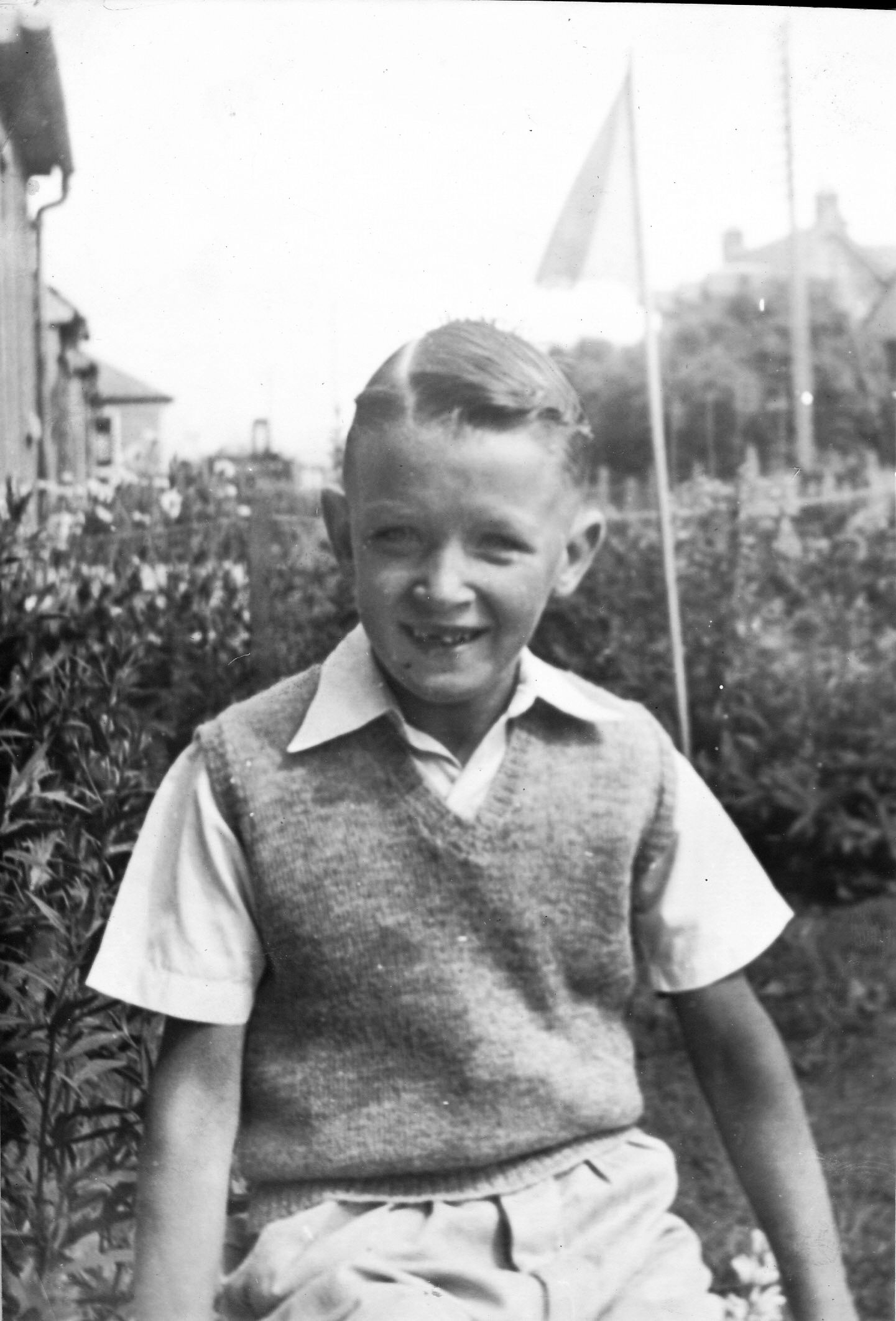
Whiting Bay Memories would like to say a huge thank you to John McKenzie for allowing us to enjoy his childhood memories.
Standard Rules of Copyright apply.


Lovely to read how the Terrace came about. Walked it many times when Coopers were the Shop, we came down the Glen from Lum St in 1940’s and then again from the 1970’s from the Spinney. Before that my middle son found friends to play with from there when we rented School Masters cottage or holidays.
LikeLike