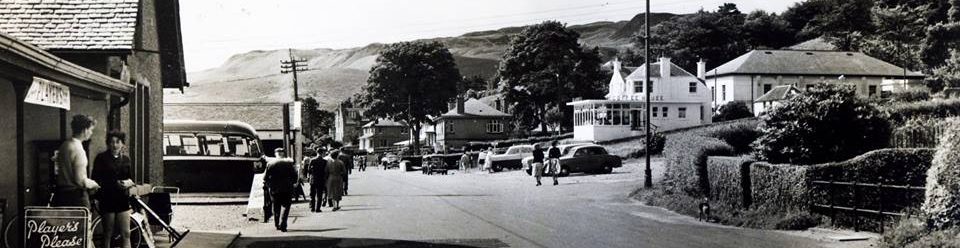
THE MAP by John MacKenzie
THE MAP
Robin arrived just after 9.30 that morning, his eyes bright with excitement, the cause of which was firmly grasped in his hand. A map, purchased between us after two weeks abstinence from lemonade and chocolate. He had asked Mr Morton earlier in the week for the biggest scale that you could get, only to be told that he would have to send away for one as he had sold out all of his stock. This had been a bitter disappointment to us, as any further delay to our plans might mean having to abandon them altogether. He had reluctantly agreed to get it ordered, thinking that it would take weeks to come, just as the football magazines had last year. It was summer, though, and the ferry made several journeys every day to the mainland, which made deliveries of such materials almost as quick as anywhere else in the country. The map had arrived the next day and we had wasted two whole days gloomily waiting while the thing had been sitting on the shelf, inviting someone else to buy it instead. It was only by chance that Robin had been sent along to collect the Family Allowance money from the post office and had spied it , sitting there in full view of the public. He had come round to my house as soon as he had returned. His bike had been discarded in a tangled heep halfway through the front gate and Pal had been left in the garden to pester my dad, who was digging enormous trenches, two spade depths, into which he was burying the mountain of rotting seaweed which I had transported for him on the cart the previous Saturday.
We rushed up to my room and started to unfold the map on my bedroom floor, having to move most of the furniture in the process. It was huge! I had never seen anything like it before. The whole island lay spread out in front of us, and we gasped at the complexity of it all. It took us both about three seconds to find our village and a further two to find the terrace and surrounding district. Robin’s house was actually drawn on the map! We hadn’t expected this scale, this degree of information. I was a little disappointed that my house wasn’t shown as an individual square like that, but that soon passed as I realised that the Terrace was shown quite clearly. Even the back road was on it! We both followed it round with our fingers, then rushed to the window to view the real thing. It was unbelievable that all this information was on a map, or that it was right here in the room, and, belonged to just the two of us. We lay on our fronts for about an hour, trying to absorb all of the details staring us in the face, both of us slowly realising what this all really meant. The adventures we could have, the journeys, fishing expeditions and all the other uses that this object could be used for started to form in our minds and the ideas came rushing out in torrents, punctuated by intense studied silences.
We had always wondered where the burn started, thinking that it must come have come out of a hole in the ground or maybe a cave of some sort, never having ventured far enough yet to find this out. Now, after much tracing and discussion, we discovered that, way beyond the waterfalls, the burn actually split in two, the thin blue lines going off in different directions. This was discussed at length and we both agreed that we had to take fishing rods and supplies and go to visit this spot on the map, then follow the two streams to their ends. The two ends were quite clearly marked on the map and therefore, since it had proved to be so unbelievably accurate so far, we knew that at last we were going to discover the true beginnings of our fishing source. Imaginations ran riot as we contemplated this discovery. The “pots of gold “ at the ends of these streams could not be discussed, as no words could describe the myths that were being created in our own separate heads. The excitement of this prospect grew as we discussed how much food we would need to take for that length of adventure, and, whether or not we could cook beans again, in their tin.
As we poured over the geographical wonder in front of us, we started to decipher some of the symbols scattered over the page. Some were self evident, such as drawings of rocks or trees, others required us to consult the index down the side. We discovered unknown “forts” which the map said were in our glen, puzzled as to why we had not known of their existence before this. Strange names in Gaelic confronted us and we made up our own pronunciations for them, for ever more having a different language to describe our surroundings to that of the other people, or children, in the village. We felt an immense sense of power at our new knowledge, realising that we could use all of this information to create adventures which probably no-one else had ever done. We could now find our way to places that had never been seen before, take our cameras, and return with the proof of our discoveries.
We decided that every Sunday we would get up early and prepare for a new quest into the unknown, moving further into the glen or even beyond it’s confines, each week , until we had visited everywhere with a name on the map. The realisation that our fishing trips were no longer limited to our own, well worn pools, in Glenashdale burn made us even more excited. We visualised catching bagfuls of large trout in places with huge, slow, black stretches of water which no-one else had ever fished in. The fish, there, had to be enormous and plentiful. We could keep all of this secret and have a never-ending supply of sport for wet days. On the map, there were rivers and burns everywhere, running twistedly far inland, far from roads and visitor’s fishing rods. We often prayed for heavy rain to coax those large, elusive fish from their hiding places; we had even seen them in our own little burn and, occasionally, caught one when the circumstances were right. The concept of unfished, virgin water, after the rain, made us leap about the room with joy for a few moments before returning to our fronts on the floor, ready to create another, even better plan.
The next discovery, after sorting out scale and distances, was to change our lives forever. We both noticed the large, blue, pear shaped blob in our, southern corner of the island, but had both overlooked it until the symbol index revealed its true identity. Loch Garbad, it said beside it on the map. We could not take this in at first, we had never even heard of such a place. We both checked again. It was a loch. It was, according to the map, quite close to where we lived. This was a real find! We worked out that it could only be about two or three miles from the Terrace. Neither of us could believe this was real, as we stared at it on the paper. This was too great a find to be possible: we had, momentarily, lost faith in the accuracy of our map.
“I’ll ask my dad if he’s heard of it”, I said, needing confirmation of something too exciting to believe.
We rushed over to the window and pushed it up halfway, sticking our heads out in unison, to look down to the garden below.
“Dad” I shouted down, “ have you heard of a place called Loch Garbad, up there in the hills” pointing vaguely in the assumed direction. “Yes” came the reply, after a short pause. “I know it by a different name though, the Black Loch is what I call it”. “Why is it called that?”, Robin asked, just before I did. “Because the water is so dark in it, I suppose” came the reply. “Is it a real loch, I mean is it deep, is it big?”, we stuttered between us. “It’s a real loch OK, and it’s very deep, that’s another reason for it being black”, he added as he dug. “How deep is it?”, I asked. No-one’s ever been able to measure it, I don’t think, but it is very deep, it’s an old volcano crater”, came the answer
We both dived inside again, even more incredulous at this news. Black, deep, unable to be measured they say, and a volcano!. The first excitement grew into a fever of activity and discussion as we pondered over the few facts we had. Before long we had both agreed that this place had to be the first expedition with our new map. We measured the loch on the map with a ruler and did a quick sum to find out what size it was, using the scale on the map, and arrived at several different answers, before deciding that it was between a quarter and a half mile in length, and nearly as wide. We could not visualise this size of water pool at all, the biggest pool we knew of was only about twenty yards long and about five wide, just below the waterfall. This thing was like the sea, by comparison! Within ten minutes we had persuaded ourselves that we had to go to see this place, and we had to go now, today, so that we would have time to go again before the holidays were over.
We realised that we would have to get permission for such an epic journey and tried to work out the best way of achieving this. We decided to say that we wanted to go fishing up the burn all day, taking food and drinks with us, coming back at teatime. Within half an hour we were ready to depart, with flasks of tea and bottles of juice. Various foodstuffs were also packed into our canvass fishing bags, alongside jars of wriggling worms and maggots. Our rods were checked and made ready, our cameras fastened to the bags.
We were always allowed to go fishing, we knew, as we made our way past my dad, but this was different, and a little bit dodgy
“Where are you two off to then?”, came the dreaded question as we were almost through the gate. “Fishing, up the burn, all day, we’ve got our lunches and everything” I said, keeping moving forward, ”we might go to the Black Loch, we might not” I added in a panic, but sounding as if it wasn’t at all important
He only laughed in reply at this statement and continued digging. Pal had long gone home to pester Robin’s dad. He didn’t usually come fishing with us because he splashed in the water and stopped us catching anything. We set off, armed with the map and enough time, we reckoned, to complete the round trip before teatime.
In less than one minute we had reached the end of the Terrace and started up the dirt track road which ran alongside the burn for a couple of hundred yards, finishing up at the last cottage on this side of the water. The road then became a path on this side, which hugged the burn as it twisted and turned for about a mile, leading to the waterfalls. If we had been fishing the burn, we would have stayed on this side, visiting all of our favourite stretches of water all the way up. We were, however, on a different mission that day, wanting to reach the waterfalls as quickly as possible. The path on this side was very slow, due to lack of use and the resultant encroaching bushes and trees. We therefore crossed the burn by means of a rather shaky wooden bridge, which was always in need of repair, to join with the path on the opposite side.
This route was the main path to the waterfalls, heavily used by tourists, in the main, and was therefore quite clear for most of the way, their heavy walking boots crushing the plants which tried to establish themselves on this narrow highway. We always carried our rods assembled, and baited, so that, at any point along the way, we could simply dangle the line over the edge of the bank, in the hope of catching something. We found it hard to resist this temptation at almost every little run of water that was accessible, as well as the one’s which weren’t . It would normally have taken us an hour or so to have gone this far, but today was different, we had to travel as fast as possible and this other route was much faster. We started to jog along at our normal coming home speed, our rods held outstretched in front of us, ducking and weaving through the bracken fronds, then into the heavily wooded area which made up the rest of the glen. Running at speed, jumping ditches, tree roots and boulders while steering the tip of the fishing rod, some ten feet in front, was done with practised skill. We knew every corner, ditch, bush, or any other obstacle that was on the paths on both sides of our river and could negotiate this terrain at quite remarkable pace, even faster on the way back, which was downhill, and fairly steep. There were several reasons for having to move so fast, on a normal day. We were always late for tea, always hungry, usually wet through from wading in the burn, but the sheer exhilaration of running headlong over this kind of mixed surface was a challenge you could not ignore. The co-ordination between eyes and limbs was exceptional, the tip of the rod the only point of concern to us as we hurtled along in mid air most of the way, our legs behaving like motocross shock-absorbers. Another reason for speed was to escape the attractions of the midges, which, at our normal return time in the evening, had reached their peak of activity and the accompanying desire for blood and sex. Travelling at, as we thought, at least twenty miles an hour, didn’t allow them time to sense your presence, or time to land. The cooling air which rushed over us as we flew also soothed the lumps and itches from previous encounters with this insect scourge that we had to exist with all summer long. The path we were following soon left the river bank and started to climb steeply, diagonally across the face of the heavily wooded hillside. The flowing water could be heard, and occasionally even seen, far below on our right hand side. The sound of it was one of the most comforting and compelling noises which existed in my life, weaving its mesmerising spell among the trees and wet grass. The smell of moss and wild garlic drenched the cooler air under the trees and filled our lungs with purity and goodness with every deep breath as we ran, now much warmer from the path’s incline. Within fifteen minutes we had reached the upper reaches of the wood, still moving at the same pace, and burst into the bright sunshine, which bathed the long coarse grass outside, sprouting in huge soft clumps at the sides of the path. This material was one of the most pleasant and sensuous substances in my existence, with its thick, soft roots, brown and hairy and coated in rich green moss. The long white leaves curved over these soft mounds, dry and crisp, like the hair of the magazine girls.
We had reached the flat area which surrounded the top of the waterfall, the grass gradually thinning out until we were standing on the bare rock, which, hundreds of years before, had been gouged away by the narrow rushing torrent of white water which now squeezed through between the very walls it had created. This was one of the most exciting places that we visited, because the noise was loud and, just a few yards round the corner, the same water went hurtling over the cliff face, dropping straight down for about sixty feet into a deep dark pool, across which lay the remains of giant tree trunk and onto which the water cascaded, breaking its fall. Beyond the pool at the bottom, only a few more yards further on, the already injured water then went pouring over the second drop, into a black abyss of around one hundred and fifty feet, where most of it vaporised before reaching the great sharp rocks at the bottom. The noises that all of this landscape created always filled me with a dark dread. The concept of falling into this, higher up, rushing stretch of water and being swept round the corner, over the fall, made my stomach heave and my heart miss a beat as I realised the horrible consequences of this happening. I loved to hear the sound, see the water and watch it disappear, to feel the excitement of the place, but I was always relieved when I moved further away from the very top.
We sat down on the warm soft grass further up stream, away from the immediate thunder of the fall and well safe from any danger if we should fall in by accident. The water up here was pure and. cold, but peat-brown in the deeper pools, very refreshing to drink after our climb. We opened our bags and removed the first of the food supply, two Penguin biscuits, which we ate hurriedly as we stared at the map, which was folded so that only this page of the island was visible to us. Realising that we had already traversed half of the distance, we allowed ourselves a little time to plan the next step.
A small stream was shown on the map, which joined the main river further upstream. This small tributary appeared to lead up to plateau, which we could tell, by the contour lines, lay at the same altitude as the loch itself, at 259m. We immediately packed up, never even bothering to try our luck fishing the pool right in front of us, such was our single minded purpose. After struggling a little through deep heather and occasional crops of line tangling bracken, we discovered the stream shown on the map. To our dismay, however, it turned out to come from a deep gorge which ran all the way up a very steep part of the hillside, the top of which was out of our view. We could see no easy way to follow the edge of this watercourse up the hill, the edges of the gorge were far too steep. Looking around, we realised that whatever direction we took, we were going to faced with a very steep climb to get to the point we were seeking. This part of the journey was extremely tedious, being forced to wade through waist deep heather which seemed to grow out of the hillside, horizontally, with very few spaces between stalks. The only way to make progress was to throw our bags and rods ahead of us, then haul and throw ourselves after them, a foot at a time. The sun was very hot and before long we started discussing giving up this route to look for another, easier path. After a short rest, and some lemonade, we made the decision to continue, since, after all we were almost at the summit. More than half an hour later we did reach the top, exhausted, but glad that we had made it. In front of us, stretching across our path, was a newly built fence, covered with wire netting and stretching as far as we could see, in a straight line over the hills in both directions. We were in new territory now, the view behind us being recognisable but different, due to the increased elevation. We were amazed to see Goat Fell in Brodick looming out of the hills across on the other side of our glen, sparkling blue grey in the distance. The first photographs were taken from this point, a worthy and new perception of our surroundings captured for ever.
We followed the fence line for a short distance, looking at the surrounding small hillocks and gulleys for a suitable point to set off, towards our target- on the map, remembering each landmark for future reference and guidance. The fence abruptly changed direction, disappearing into the hills again, and we chose this point to cross it and depart from it’s course, which was obviously the opposite one from our own. The ground was easy to walk on, basically short heather and coarse, broad leaved tussocks of my favourite grass, interspersed with sections of soft beds of thick moss, the beginning of a new layer of peat. The effect of the hot sun was tempered by a faintly cooling breeze up on this moorland, the silence was unreal. Only the occasional sound of bird could be heard, apart from the soft crunching of our feet on this featherbed surface. We continued on in a straight line for about half an hour, staring ahead fixedly, desperate to find our goal, doubting, now and again, that we were going in the right direction, since, by our calculations we had expected to have arrived by then. We looked around for tell tale signs, sloping hills or any other clue to find a loch that we could think of, but nothing obvious was there. Suddenly, as we came over the top of a small rise in the peat, we got our first, stunning view of the Black Loch. We could see, not very far away, a small stretch of glistening water, and as we charged towards it, shrieking, bags clattering, the whole vista of this incredible’ sight opened up to us, and we stopped dead in our tracks to stare at the whole picture of our discovery. It was much bigger than we had persuaded ourselves it could have been, bounded on two sides by steep rocky banks, both ends being virtually flat at the waters edge. It was the most beautiful thing I had ever seen, and I felt tears of happiness well up as I gazed.
The end nearest us had some tall reeds growing out of the water, with the approach to this shore looking a very wet, a marsh area of about fifty yards in width, the same in length. We were standing on the edge of this bog, still on a drier part of the ground, but decided to make our approach to the shore from a different direction, circling round the marsh on its right hand side, towards the rocky faced hill on the right. Five minutes later we were standing at the top of the same hill, looking across the water, which was flat calm and shining. We couldn’t believe our eyes, looking at what lay in front of us, then something even more incredible happened as we stared at our new treasure. Near the reeds, only fifty yards away, giant ripples could be seen, spreading themselves across the still water. Fish!. Big fish too, by the looks of them. We could actually see their backs as they flipped out of the water to catch the flies that danced on the surface of the water. This sight sent us into a flurry of activity, baiting hooks with warm worms from our jars, preparing our lines for long casts out onto the black mirror in front of us. We avoided casting into the reeds, as we knew that we would only get tangled up, losing our lines, so we took up positions on the bank, ten yards apart , hoping to entice the fish to us. We crept forward, silently, crouching to keep out of sight of our prey, having learned a long time before that being seen was always the main cause of our failures. The most annoying thing that normally happened to us, when fishing, was other people marching up to us in this position and inquiring whether or not we had caught anything. Here there was no-one to bother us, no excuse for failure due to noisy feet, loud voices or being seen, if we were careful. We talked in whispers as we approached the edge of the water, even then, hardly at all; we knew the importance of silence. The glassy surface cracked softly, twice, as our baited hooks landed, about twenty yards from the shore. The ripples spread, then subsided, the still, flat surface once again intact. We both used one pound breaking strain line, which was difficult to see at a distance, normally, but here, it was clearly visible, disappearing into the face of the black mirror.
The expectancies of this first cast were enormous. We had done everything right, therefore there should be no reason for failure, and the fish were still, periodically flipping in the water, only a few yards away. Feeling the thin nylon filament between the fingers of my left hand, waiting for the unmistakable tug of a trout, set my mind into super-concentration mode and I stared at the water intently, Robin doing exactly the same. A silent pair in an even more silent location, not even feeling time pass.
As I crouched, warm and comfortable, I started to look more closely at my immediate surroundings. The edge of the loch was bounded by a shoreline of small, flat rocks, with quite a few larger versions jutting out of the water. I was perched, initially, on top of one of these stones, in order to get as close to the water as possible.
Straight in front of me, looking down, I could see the rocky edge dip steeply down under the surface, disappearing into the dark browny-black liquid within a couple of feet. It looked so deep, so quickly, that it gave me a similar feeling in my stomach to that of being near the top of the waterfall. After all, this place was too deep to be measured, I remembered my dad had said, earlier. Not being able to see the bottom, only that far in front of me, reinforced this immeasurable concept, creating a healthy respect for for the sight in front of me. A feeling of pure awe and excitement, tinged with enough fear to keep concentration highly alert, surged through me as looked around. This was the most idyllic setting I had ever experienced. The quiet was almost unreal. Water, in my experience, always made a noise: the waves of the sea, the flow of the burn, basins and baths and taps, hoses, all made sounds which meant water. Here, the substance did not speak at all. There were no trees to tangle lines, nor roots on which to lose precious hooks, no bushes snapping into eyelids or briars slicing at uncovered legs. It was dry, warm, open, and somehow, cosy, with the soft heather and grass all around. Most important of all, however, as yet there were no midges! Sitting still, when fishing in the burn, was virtually impossible most of the time. This was such a change from that misery that I could hardly believe it.
We must have stayed in the same places for over half an hour, only occasionally recasting the lines, or checking the bait. We had already learned patience, from all our previous excursions. We knew that it was always rewarded in the end, such was the nature of the sport. The patience also allowed long periods of introspection, letting a young mind ponder over some of the myriad of thoughts that flooded in and through every day. It was possible to make great use of these sections of time, many difficult problems had been overcome by fishing patience. It was, in later life, to lead to an ability to cope with such things as queuing in pubs, waiting for late trains or ferries and other human tests of endurance which were to be experienced, like wives and children. It was possible to get lost for hours inside your head, even just contemplating the one topic. The pleasure and the solitude of this sport was second to none and Robin and I were fanatics for the peace and challenges that it never failed to provide. The main aim, however, was to catch fish, if possible, and for this reason we started to move round the shore of the loch, looking for a more productive spot.
After a while, with only one, morale boosting, nibble claimed between us, we decided to put floats on, cast further out, and leave the rods fixed while we had some of our food and drinks. The rods were left, jammed between large stones to prevent them being pulled into the water by the giant trout which we knew were in there. We moved ourselves up to higher ground, still in full view of the floats and proceeded to go through the ritual of comparing the contents of our bags of supplies. Having swapped the least interesting parts of the contents, and devouring most of the remainder, we then proceeded to have a typical conversation about the current, uppermost subject in our mind at that time. Football, or, more particularly Glasgow Rangers and all of the stars and heroes of the day. We could spend hours talking about these people. We both intended to play for the team when we were older, me as goalkeeper, Robin as centre forward.
We went back to our rods, slightly less hungry to find that Robin’s float was bobbing violently in the water. He grabbed the rod and started to wind in the line. Immediately the surface of the water broke as the fish tried to fight free. Hearts racing, we coaxed it nearer the edges, describing its size in all sorts of dimensions.
Would Robin’s thin line be able to hold it? If the fish was over a pound, it might break, and it looked as if it was huge, as it jumped from the water thrashing for its life. After a long struggle, which included excellent fishing skills on his part, properly playing it to protect the line and tire it out, the fish was landed safely on the shore. A quick blow to its head with a heavy stone, a few last nervous twitches and the prize was lying on the grass, shining in the sun. Its colour was incredible, its size immense. We each picked it up and reckoned it to be between a pound and a half and two pounds, much bigger than anything we could catch in the burn, apart from seatrout, which we had both managed to capture once or twice. This fish was different. Rainbow Trout. The mass of colours on its sides and back were beautiful to see, fresh from the water. It was darker than the pictures in our books, due to the peaty water it lived in, but was most definitely a Rainbow, the first real one we had ever seen. The splashing and fighting of the thing must have alerted the others to our presence as no more were caught that day, slightly disappointing to me, not, however, an unusual result of a day’s fishing.
After further attempts, we stopped and investigated more of the loch’s shoreline and surrounding small hills. Far in the distance, out to sea, we could recognise Ailsa Craig, but everything else was unkwown. The different small headlands that made up the shape of the loch, all had characters of their own, giving the place its own unique identity. This wasn’t just a temporary, flooded peatbog, it was an ancient, permanent, rock walled structure of unimaginable depth. The opposite end to the one we had arrived at turned out to have a shallow bay, which we could see was no deeper than a foot or so, extending out at this depth for a good ten yards or so. The shore end of this formed the entrance to a small stream, which was the only outlet for the water from this natural reservoir. It was like having a miniature country of your own to exist in, all within half an hour’s reach by foot.
We started to plan our next visit, armed with fly fishing tackle, considering the possibility of camping here all night to allow us more time. The thought of manoeuvring a tent up the first steep hill we had tackled was daunting, we knew, probably impossible. Maybe there was an easier way to get here, we considered, and consulted the map.
A farm lay about one mile to the south, and, going by the contour lines, the hill was not nearly as sharp a rise as at our side of approach. We reckoned that we could get a bus round to the farm road end and have a fairly easy walk up to the loch from there. This concept made us also decide to return by that route today, to check out the lie of the land. After gazing again at our newfound treasure, we reluctantly packed our things away and started the journey south from the loch, following the stream downhill. The walk was easy, down the long gentle slope, but still took us longer than we anticipated to reach the farm.
Not quite sure of the etiquette when meeting a farmer on his own land, just on the edge of his farmyard, we tried to find a way to round the houses, but there were too many animals and fences to contend with and we had to cross the yard instead. “Been at the loch boys? Fishin? “, came a friendly sounding voice. ”Yes”, we replied, sheepishly. “And where are you off to now?” he said. “We’re going home, to Whiting Bay, can we get to the main road this way?” I answered, knowing fine that we could, according to the map. “Aye, straight down there” he said, pointing. “Where do you stay in Whiting Bay?” “The Terrace “ I replied. “Glenmhor” said Robin. “You’ve a long walk ahead of you then, you’ll be late for your tea tonight” the farmer added. “You’d better not dither on the way”
We marched along a straight farm track, which seemed to stretch for miles ahead of us, getting a bit worried for the time. We could imagine our teas on the table, waiting, and our mothers fussing
as to why we were late. They didn’t really know where we were did they, unless they asked my dad. What would he say?
Reaching the main road took an eternity, also took us by surprise as the farm track we were on continued straight on, across on the other side of the tarmaced one. We arrived at this point suddenly, and with relief that we were on the way home at last, even if it was a long way off. We walked about a mile, cheerfully hoping that someone might give us a lift to speed things up a bit. Suddenly, in front of us, appeared an unmistakable small grey van. Chill ran through us. Robin’s dad!
He drove past, to the next gate entrance, turned round then pulled up along side. “Do you two want a lift to Whiting Bay, or should I just let you walk the rest?” he said gruffly.
We jumped into the thick black pipe smoke, me in the back among the reels of film and other gadgets he carried. A fairly firm lecture was administered on this journey back, which we both accepted quietly, saying” Sorry” at what seemed like sensible moments in time.
I had to go through the same lecture again on arrival at my house, as did Robin with his mum, but it really wasn’t as bad as we’d expected. My dad, when asked where we were, had remembered the conversation that morning, but hadn’t thought we would attempt such an epic adventure. I think that, deep down, they were all quite glad we were capable of it, and that we had completed it without mishap.
by John MacKenzie
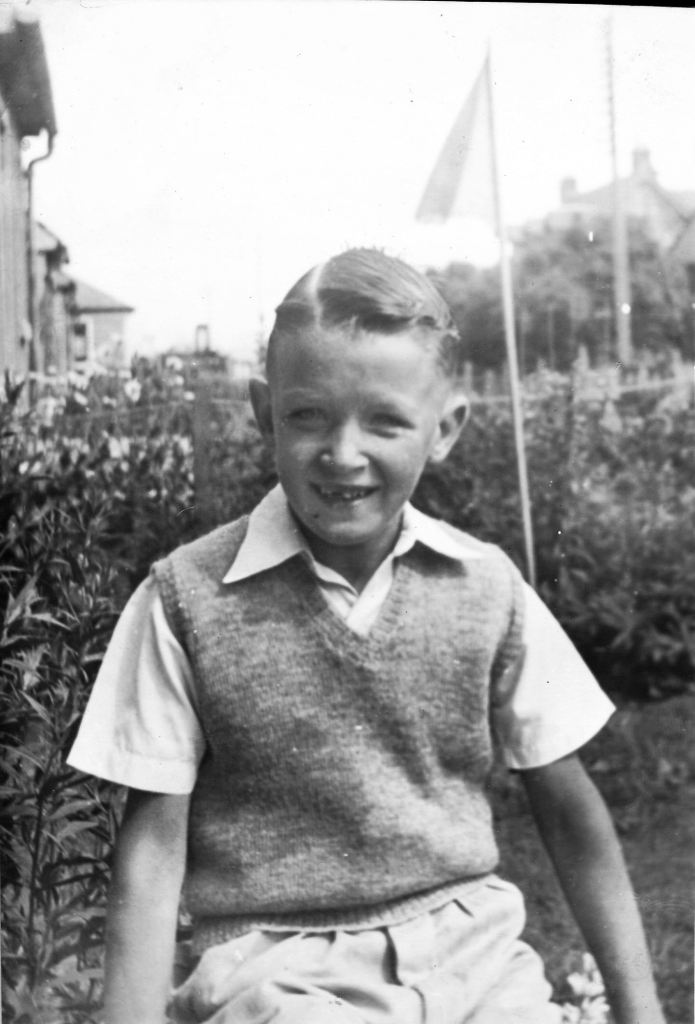
Another great story from John, we hope you enjoy this as much as we did. Thank you John for sharing these great memories.
 Whiting Bay Memories