Sharing history and your memories of Whiting Bay on the beautiful the Isle of Arran
Holidays in Arran – Tale
By Elizabeth Nickson
This story has been Prepared and Transcribed by Whiting Bay Memories for your enjoyment.
Preface: Our Story. This beautiful little story was found in the shop at the Arran Heritage Musuem. After a very quick glance it was clear that the story was about holidays in Pleasantfield. It was also clear that Mr McKechnie was Neil McKechnie, grandfather of our chairperson George McKechnie. So the only 3 copies were purchased. These had been handed into the museum a few years ago but no contact was left. We tried to find family connection to Elizabeth Nickson through our facebook group so that we could have permission us use the story. However this yielded no results,so we feel we can share this lovely story with you. We are sure Elizabeth would be pleased if she knew. The image of the Piermaster has been added by us, and the image of Pleasantfield was also a Whiting Bay Memories picture. All other pictures are taken from the wee book which is A5 in size. Enjoy the read.
Holidays in Arran by Elizabeth Nickson
As a child, I grew up in the Thirties in the years just proceeding the Second World War. Home to me was a village in Derbyshire, where I lived with my mother and father. Father practised dentistry in the county town of Derby as it was then and he had come South with my mother from Glasgow in 1935, when practices in the North were hard to come by. We were happy in our village setting near Derby, but once a year when the Summer holidays came round, we would travel North, back to Arran, where many idyllic days had been enjoyed by our families.
In those days houses were rented for the month, and in the weeks preceding our holiday, mother would make long lists of items which must be included in our baggage. These included everything from items of bedding to the essential tin opener.
The big trunk would be carried down from the attic and carefully and methodically the items would be stacked away – everything in its place. By previous arrangement the Station Master of our little village station, a dapper man in his smart London and North Eastern Railway uniform would wheel his trolley up our path, saluting my mother and twirling his waxed moustache as he loaded the big trunks. Each trunk was encased in hessian which my father had sewn up carefully with a carpet needle. This was to ensure that the trunks would not get damp during their long journey by train and boat from Ardrossan over to Whiting Bay.
What excitement was felt, the air of anticipation in meeting the same families and familiar faces again, of seeing what changes had occurred in the year that had passed. At that time houses were taken from one year to the next. Many of them had very basic facilities compared with today’s time share lodges, many had outside dry closets. Many had primus stoves as their only cooking facility, but the pleasure of meeting cousins, aunts and uncles again who all came down to see each other at some time in the month made it all great fun.
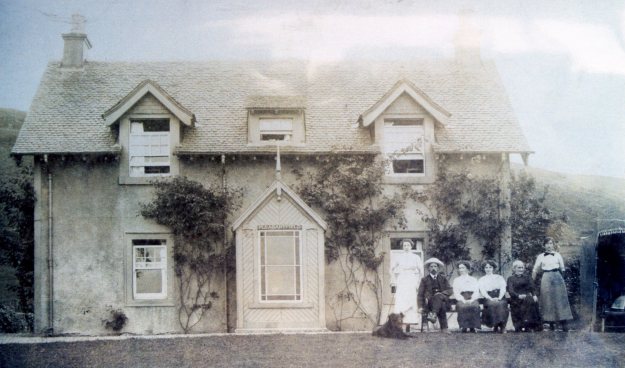
Pleasantfield Whiting Bay , Isle of Arran
Our house in Whiting Bay had very hard horse hair sofas and I always remember my legs being prickled as I jumped up and down. Fresh milk from the cows and a bowl of eggs from the wandering free-range hens would be popped through our window by the friendly owner, a Mrs Jean McNicol.
Tuberculin tested herds had never been introduced at that time.
Mrs McNicol was a widow and ran a small croft with the help of a shepherd, who had gained a terrific reputation for training sheepdogs.
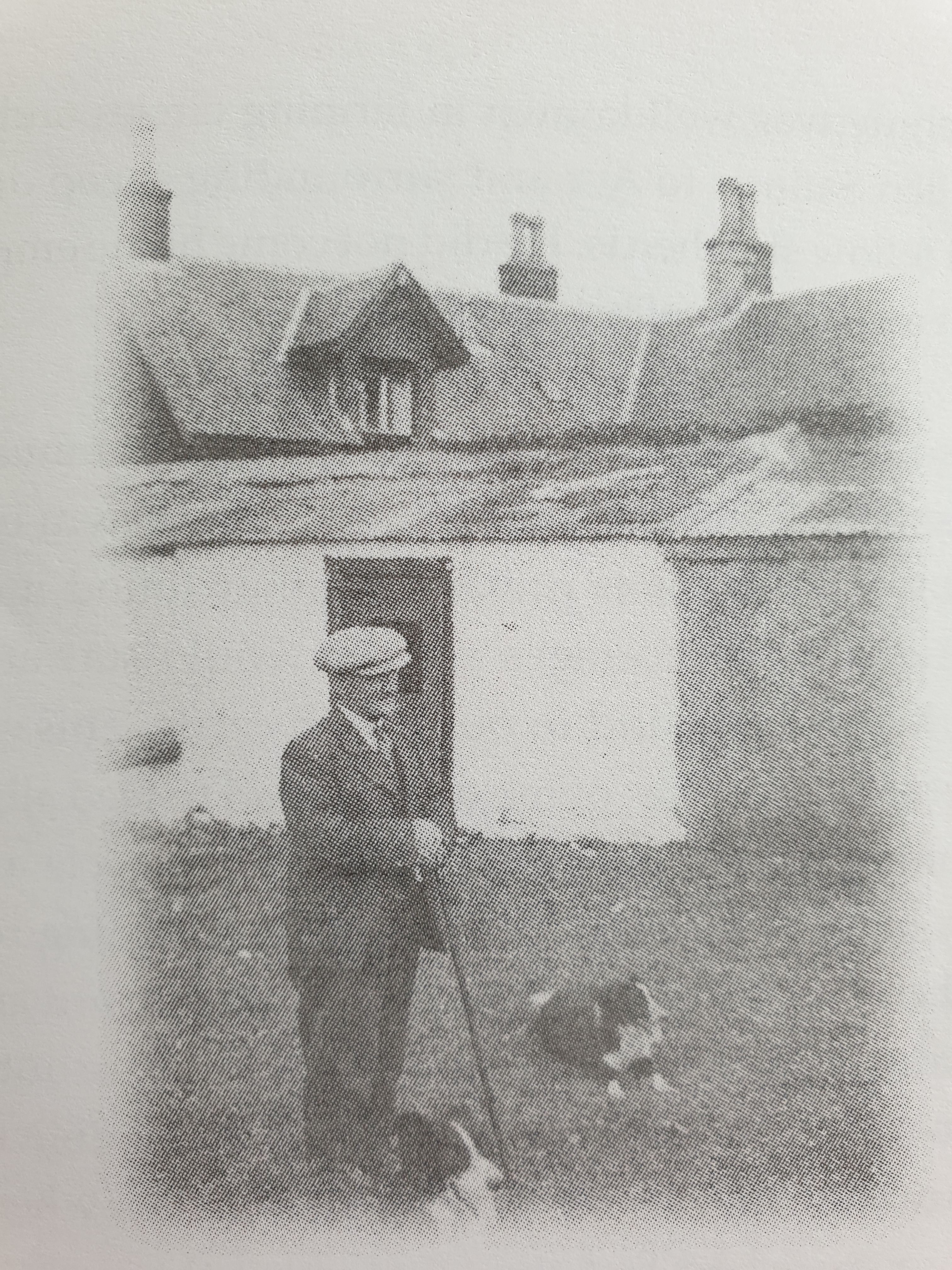
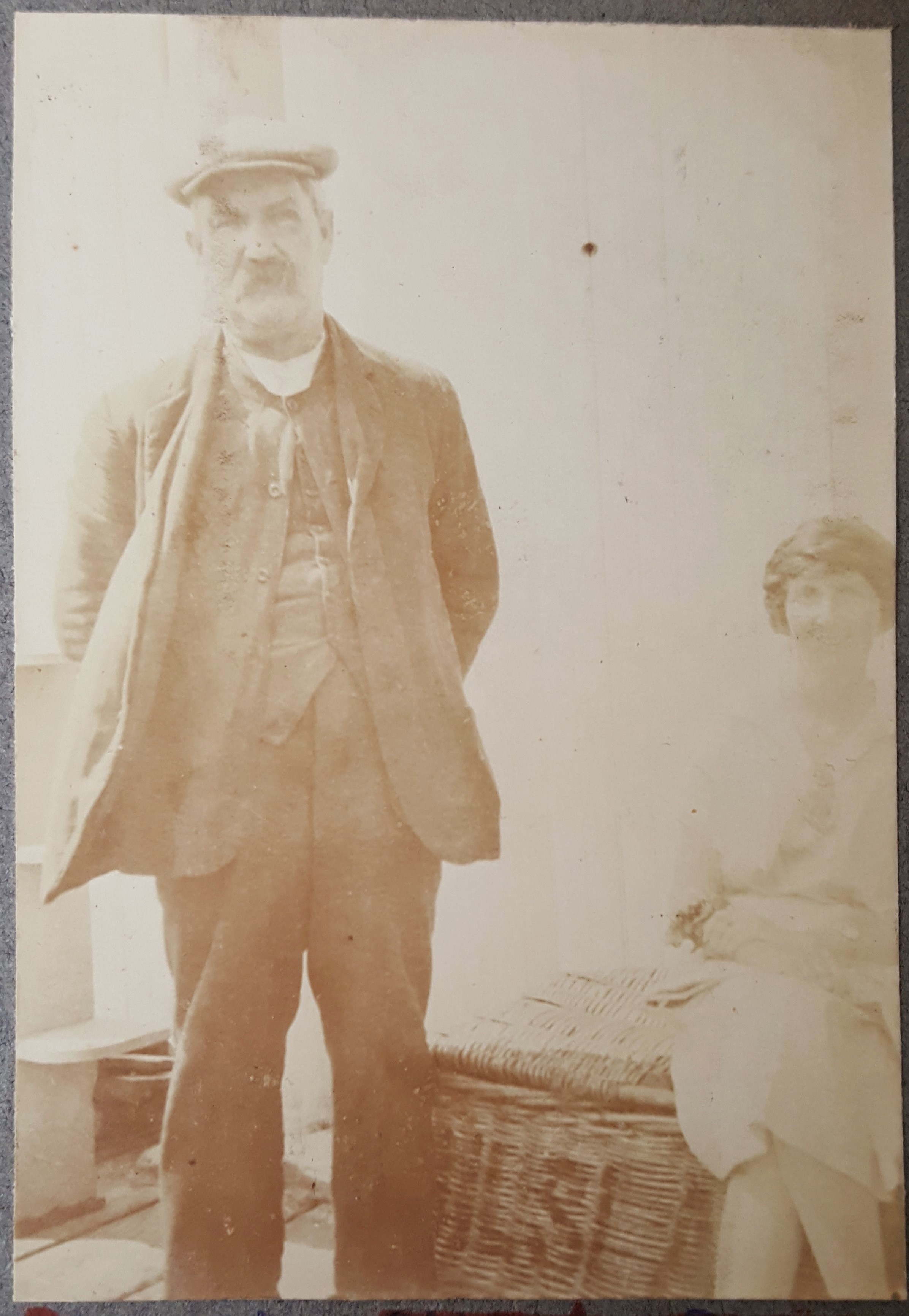
Mr McKechnie was a true highlander. He would always pass the time of day with father, who loved to talk to him.
There he would stand, his chin cupped on his shepherd’s crook, one hand over the other with his faithful Moss and Meg beside him, who were intent on his every gesture. As a child, I would love to pat these timid, intelligent dogs as they waited for their master and then to witness their amazing ability to round up sheep on the hills near the Giant’s Graves to carry out his bidding at the subtle change in a whistle.
Mr McKechnie was well known in farming circles and would go over on the Glen Sannox to Ayr and surrounding sheep dog demonstrations with fellow shepherds. He did not come home empty handed often, without recognition of his talent.

                   -----
Time elapsed and the war years prevented our annual Summer trips until just before the end of the war.
Then the era of boarding houses with ration cards was present. Mother found it difficult to cater for us due to food shortages and we would stay at a Whiting Bay boarding house and hand in our ration cards. This enabled the landlady to get extra supplies of meat and bread to feed all her guests.
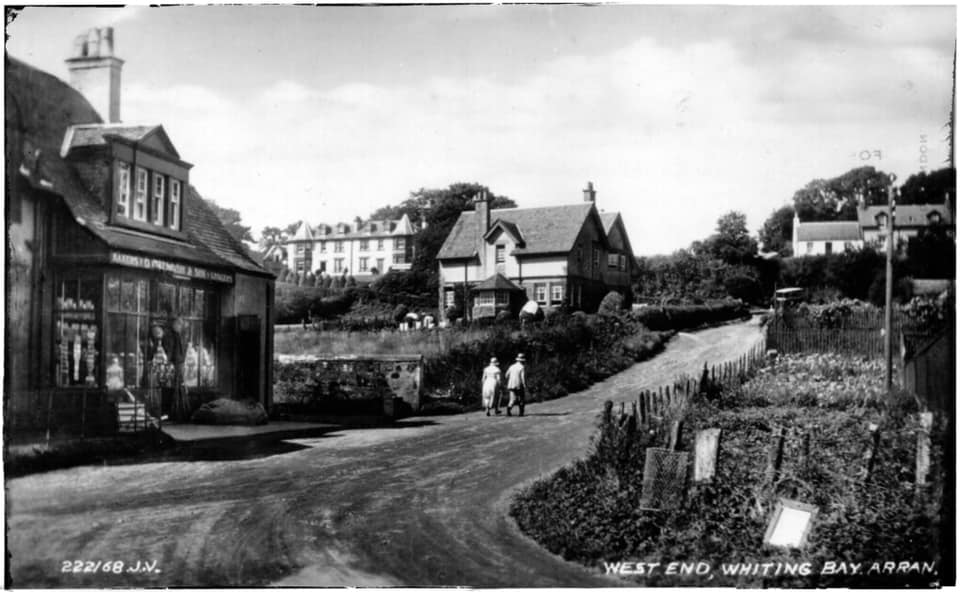
Being the youngest of the guests, I was asked to cycle along every morning early before breakfast to collect the morning rolls. I was given the heavy old bicycle which stood in the back yard and I would enjoy cycling along the front before many people were out and about – collecting the rolls from MacNeish the Bakers and delivering them safely so that they would be on the breakfast table when the gong sounded. Those days had lost the freedom of the earlier holidays but we were glad to be back on Arran.
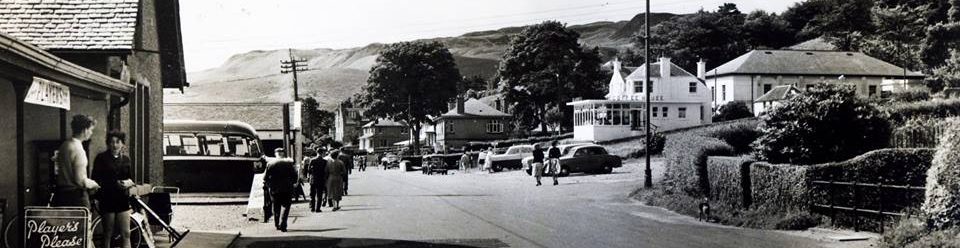
McNeish Bakery and Shop. Now on this site is The Coffee Pot.
One great occasion stands out in my memory from those years and that was when victory in the Far East was celebrated. Rumour had it that a large flotilla of Royal Naval vessels, dressed overall, were anchored in Lamlash Bay, to celebrate the occasion. In the evening, in the long twilight, which is such a feature of Arran, a large number of Whiting Bay residents made their way up to the Golf Course and up over the hills. We were all rushing excitedly, each hoping to be the first to see them. The walk was well worth it, it was a great sight. I have always remembered the grey ship, lit from stern to stern, dressed overall with bunting and streamers.
                    -----

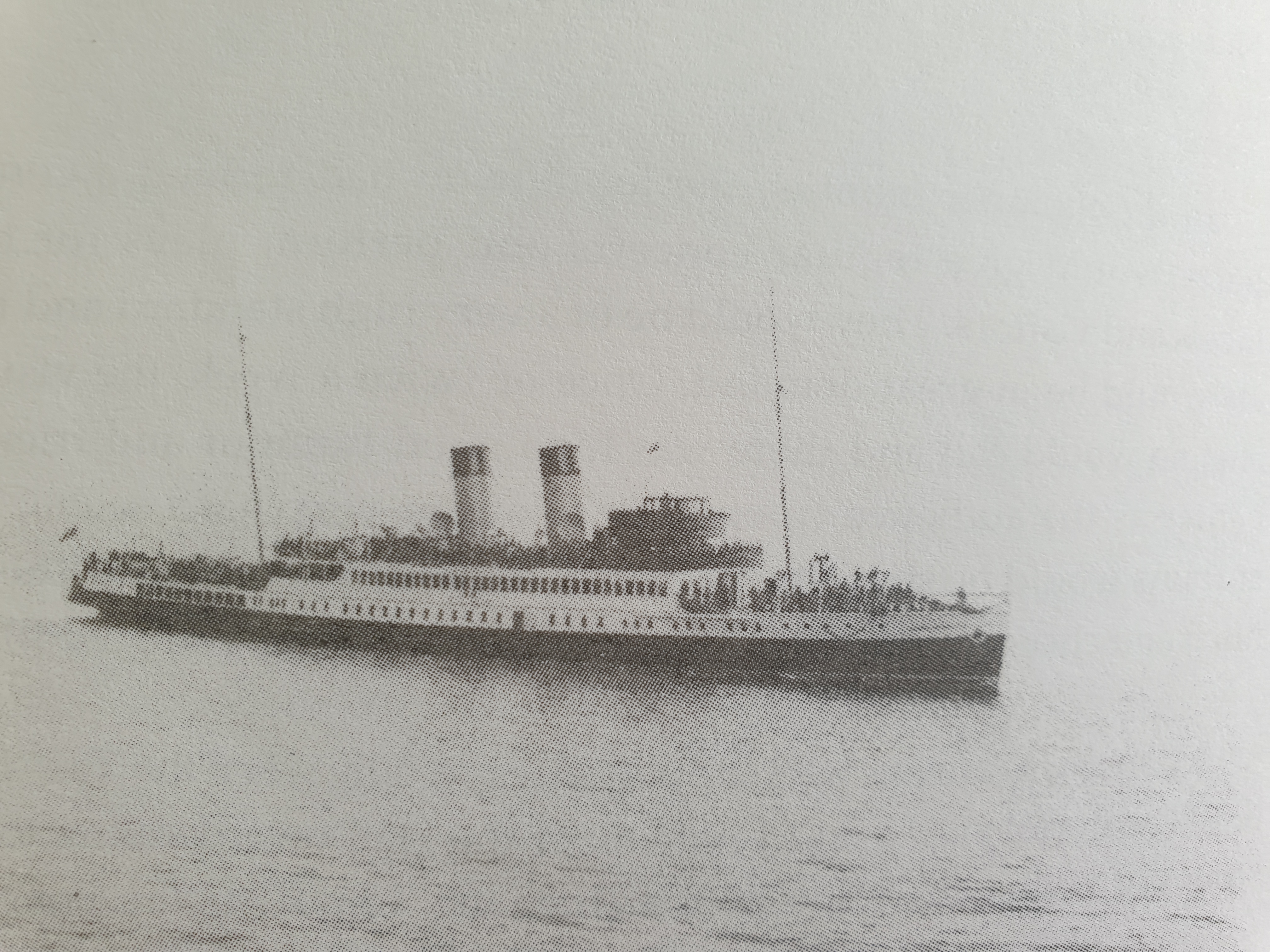
As the war years receded, Arran gradually changed, the beautiful Clyde Steamers were there for a little longer. We would now travel to Ardrossan by car and, having just passed my test, I was allowed to drive to help lessen the strain of the journey for father. Today we take our motorways for granted, in spite of their shortcomings. But then we would take several hours to cover only a short distance and, on some occasions, made an overnight stop, somewhere in Yorkshire.
              -------

As we approached Ardrossan there would be great discussion as to whether it would be high or low tide. This was important as, in those days, the cars, limited in number would drive on to the deck using wide planks.
The experienced seamen would guide the drivers using hand signals in this rather hair-raising experience. It was easier if the pier was on a higher level than the boat deck and carefully the planks were negotiated down on to the boat; but if you had to drive upwards and the sea was at all rough, sometimes several attempts had to be made.
It was great entertainment for all the passengers, many without cars who would stand and watch the hazardous manoeuvre.
You could see the relief on the driver’s face as he or she had finally put on the handbrake and left the car where requested with great satisfaction.
I remember being allowed to drive our car on the deck and feeling very pleased with myself as father said ‘Well done!’
Today, with the advent of car ferries this is a thing of the past but I will always remember as people drive on and off so easily that it was not always so. The modern car ferries may be more functional but the grace and beauty of the great old Clyde Steamers is ever captured in memory and old photographs.

               -------

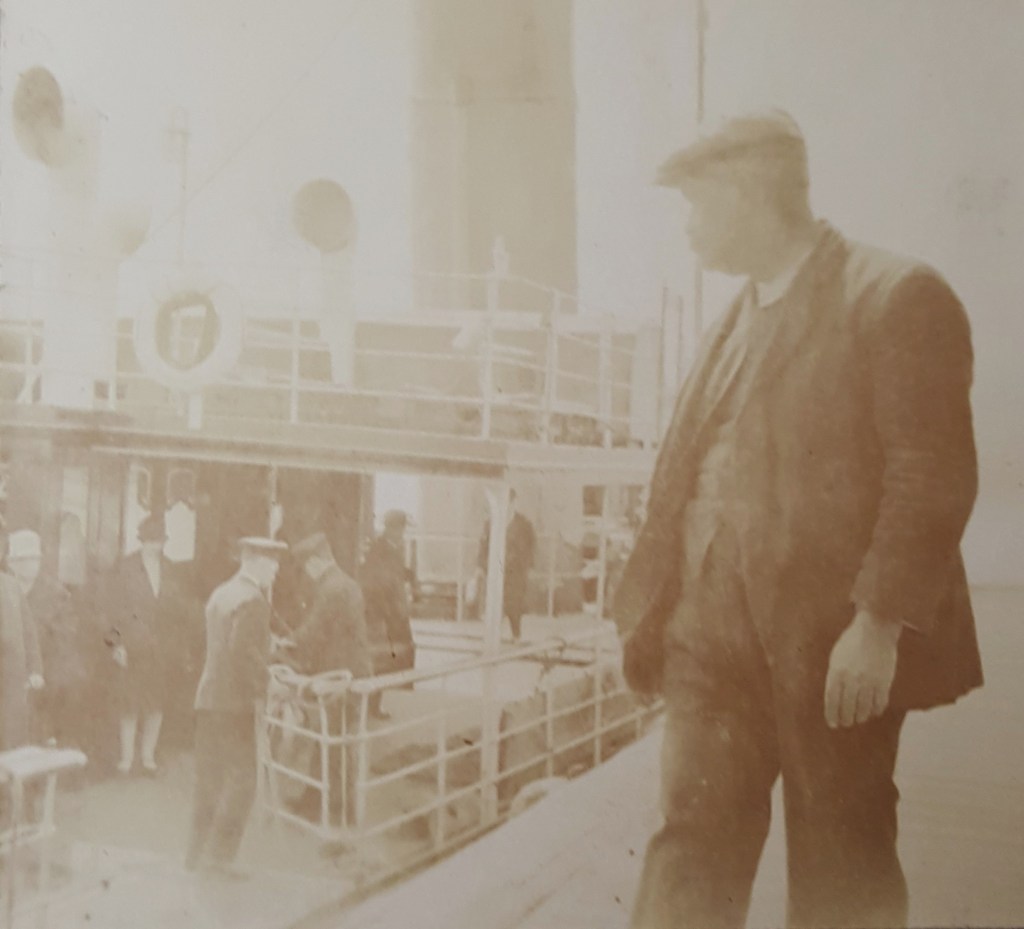
One of the daily entertainments in Whiting Bay was to go and watch ‘the boat coming in’. The seamanship of the crew was duly admired and all the comings and goings on the pier were noted; whether it was supplies for the local shops or some large package which had been ordered from Glasgow.
The Pier Master would be in charge and gave his instructions. The local boys and girls would cycle up and down sharing the excitement of the occasion and others would be meeting or waving farewell to a friend or relative.
John Thomson Pier Master
Each small village had its own pier and, travelling from Ardrossan to Whiting Bay, we would watch as some passengers disembarked, first at Brodick then Lamlash, and finally at Whiting Bay. Occasionally when a few passengers wished to go to Corrie, a large lifeboat would be swung overboard and they would climb down into the boat – to be taken across to the small jetty there.
Nowadays it is only minutes by car to Corrie and of course quite uneconomical.
In the Summer months, the locals who had formed a concert party would give regular concerts and perform plays for both locals and visitors.
They would be of a very high standard and tickets would be in great demand. Once or twice a week the visiting cinema would call and there was high good humour and friendly banter as the audience trooped in to sit on very hard seats. The curtains would be shut, the projector hopefully working without a hitch and cheers as the show began – often showing quite old films.

A dance was always well supported, especially when the ‘fair’ holiday was in full swing and I remember the Hall reverberating to the strains of ‘When the Saints go Marching in’. To walk home along the seafront after the Last Waltz, with the light of the moon shimmering on the water was a happy end to the evening.

Times change and with it the customs of the age. Since that time, with the advent of the package holiday, holidays have been taken in other parts of the world, in the desire to seek the sun. It was not uncommon to see more rain than sun in some of the annual Arran holidays.
One tends to look back lovingly and reflect on the many droll and seemingly curious activities. Today’s holidays are more organised and sophisticated, yet somehow they lack the carefree simplicity of days gone by.


 Whiting Bay Memories