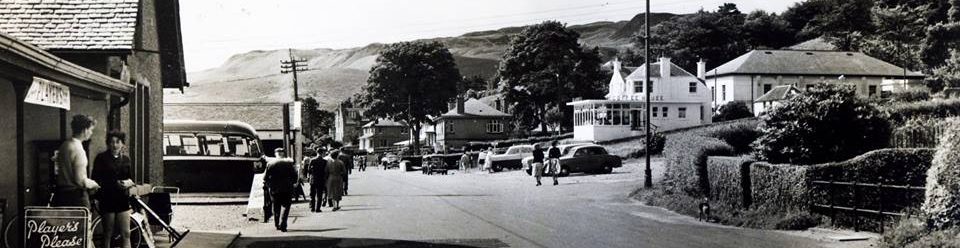
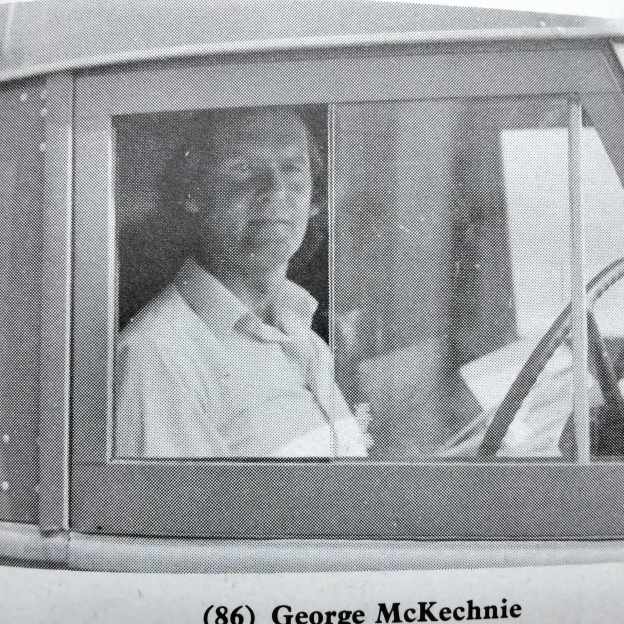
An interview with George McKechnie at Whiting Bay Memories 29/04/2024
Listen to George or Read the interview
PART 1
PART 2
George the post
When did you become a postie and how long did you work as one?
I started work as a postie in 1974, a job I did for 39 years. At the start it was actually quite easy – you had a lot of letters but not so much parcels. And you were obviously a community person as well. You delivered papers and messages; and you collected pensions – you helped people. And eventually the Post Office became, how could you say, more business-orientated so you got less and less time to do your runs and the runs got bigger.
Where you mainly in Whiting Bay or other parts of the island?
I learned all the runs to begin with and I worked in Brodick for a couple of years. And then when my uncle George, my uncle, retired I took over his run. That was the Whiting Bay run and, in actual fact, May Spears did part of it with a bicycle and then when she retired, I took over the whole lot.
Were you in the van then?
Yes, I was in the van and sometimes the land rover. You were allocated a certain time but if the mail was heavy, you were over your time. Well, between that and drinking your wee cups of tea and that, you know.
Where did your round start?
It started at the Mustard Factory, then along the Heights and down into King’s Cross, and then you went down into Sandbraes, along the front so that the businesses could get their mail first and then you backtracked and you went up to Knockenkelly and then you came back down into the centre of the village again and along to go up to the Golf Course and all the way along the high road; you would go right along to Lum Street, back out and along to Bellfield and then you’d come back along and then down the middle road. Then you’d do along the front there and behind the Bowling Green and up to Silverhill, to Jim Perrie’s, backtrack down to the bottom again, along there and along the terrace and up the glen and then along past Cooper Angus and up to Largiebeg and the last one was Trareoch Hotel, which is still the last one on the run.
If you did over your hours, did you get paid overtime?
You did and you were allowed your tea breaks – you were allowed an hour for your lunch but I never took an hour for lunch. I would take a wee cup of tea here or there, so it worked out the same, you know. Sometimes it varied where I stopped, you know, but mostly it was the same houses. Lots of people were ones who wanted some company for example, Mrs Mclardy down at the Union Bridge – she was an absolute character. When I first started the run she was up at Thornhill. I had lots of cups of tea at Janie Smith’s and she was a real character – THE character of Whiting Bay, I think, in these days. A heart of gold, her bark was worse than her bite. And even the outlying farms and that – they would rely on you bringing the newspapers and stuff. And even one time, the guy – the boss, he decided to come round with me, and I warned them a couple of days ahead – don’t mention about the papers and stuff and we’re just leaving, round by Knockenkelly, and they come out shouting ‘where’s the papers?’
I picked the papers up from the centre of the village, the ones lying out round the back – I picked up from Jimmy Gordon’s so that the outlying places that side could get them first. Jimmy Gordon was very kind at Christmas time – I remember one time he gave me a biro pen!
Lots of Laughter And I took groceries – they gave me a wee list. And old Mrs Cullens – if she wasn’t up to it, I would put the wee fire on for her and she would have a wicker basket with her pension book in it and I would just take that in and I would get what she wanted and she would get it the next day.
You also delivered the prescriptions – there wasn’t a chemist then. In actual fact, the mail was really a sideline, you know. The Post Office knew but they turned a blind eye although when the guy came over he was actually quite officious. But then through the years it changed and you had it that your boss could nominate you for an award for the community – for being a good postman and that. I did get it that one time – eventually they were encouraging you. Well, it made them look good.
When did it start to change?
In actual fact, probably a year or so before I retired, the real big change was that these computers came in. Like you used to sign in a wee book, you’d write in the number of your recorded hours and your registered letters. Then it became the hand-held computers, like wee guns and you make a wee scribble on them, and you had a wee docking station in the van – it was actually a phone. And the Post Office could dock into that, if it wanted to, and it could tell where you were and how long you’d stopped for. So suddenly it changed and they got all that information, unbeknown to us, and they collated it all. Then they said well, this run needs a bit more or this run needs a bit less. And eventually we got more and more and in the end we were struggling to get round in the time, you know. So I retired 10 years ago in 2013.
George, could you tell us about the post bus, please?
Yes, the post buses came in – it was actually a great community thing that. I don’t know if the Post Office made a lot of money out of them but it was another community thing. And it didn’t cost the Post Office anything because they got a grant from the Government for running them. And it was actually quite a good thing because a lot of people spent holidays going round the islands on the post bus and they would have post bus holidays. Yes, they would get up lanes, farm tracks and way up in the hills which they wouldn’t get normally so they were really getting to see Arran or whatever island they wanted to. They came round your run with you and sometimes you could have a dozen people – no cups of tea that day! They had to pay for the trip but it wasn’t expensive – it was actually a cheap holiday when you think about it. You took your sandwiches and ate them on the bus. I’m not sure when it ended – maybe the 1990s. I think the grant stopped from the Government and then it wasn’t a viable proposition. And then people’s runs got bigger and they had more to do so they couldn’t do it.
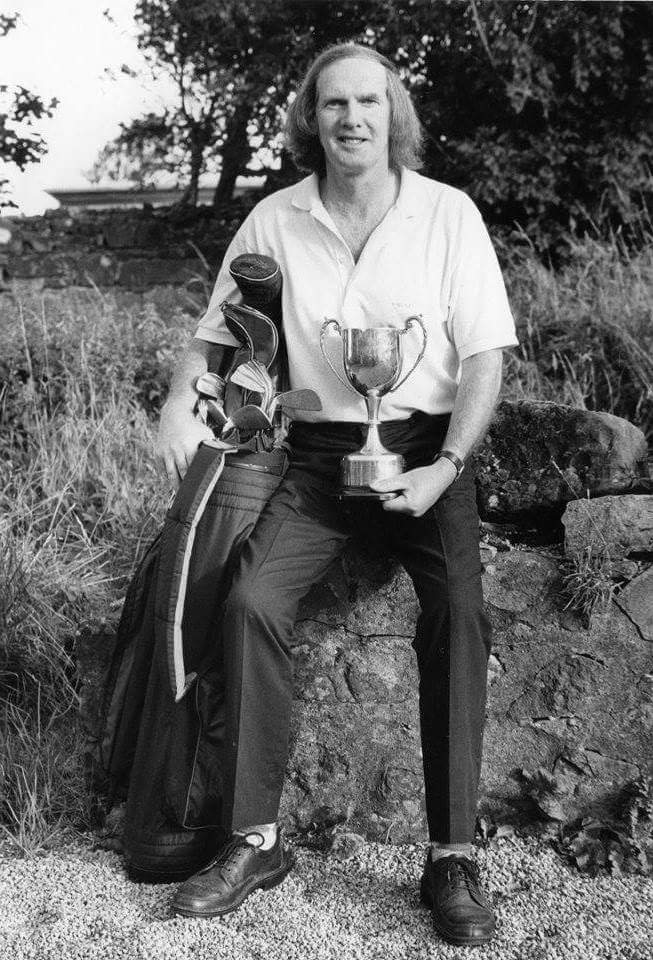
Did you have your golf clubs in your van?
Sometimes – yes.
Telegrams – were you involved in that?
Yes, you used to do the telegrams – normally when you finished your run you’d be praying that there wasn’t a telegram because sometimes if you were back first and they’d say ‘there’s a telegram for Lochranza’. You’d get paid for it though but if you were having a wee game of golf or something it wasn’t too good to have to go to Lochranza.
The telegrams – that was a big deal, you know as they were important. You know a telegram wasn’t just a letter, it was a necessary message. Earlier on there were telegram boys – the likes of Jim Pirrie started as a telegram boy but not when I started. It was after work or, if one came in, and you were near the Post Office, you would nip in and then deliver it.
When did all the parcels start?
Well, there was always parcels but I’d say when all the online business started the parcels just mushroomed. And then with all your gadgets and your telephones the letters dropped dramatically. People can talk to one another and message one another which is a shame because the art of writing letters is dying out.
Do you remember delivering things like catalogues?
The catalogues were a nightmare because they were thick books and everyone had to get a catalogue so if you had 300 or 400 places on your round they all had to be stacked up. Some of them went through letter boxes or you would leave them in an outhouse and write on the back of the letter – catalogue in outhouse or something. Not as many people as you’d think had letter boxes. And with some people you’d leave your van at the top of a road and walk down to the houses.
And then you started getting advertising junk mail, so you’d have to go to every house whether you had post or not as you had to deliver the junk mail. But saying that, early on you’d be paid so much per item, maybe a penny or so per item so if you had two or three each week it boosted your wages. Some people – it was quite annoying – used to make a show of tearing it up in front of you. Particularly election leaflets – and talking about political, it used to be a nightmare because if there was a local or general election the amount of stuff you brought from all the parties and not just the main ones. I never realised how many parties there were until I delivered the stuff. And they still do that, when it comes to an election. And the polling cards come by post so it was quite a lot.
But the likes of catalogues – they don’t do catalogues any more or so much junk mail but they don’t get paid the same now anyway. They phased that out and they gave us, for arguments sake, £20 on your basic wage so the Post Office made money out of it. But if you had overtime the extra money did boost your wage.
Did you feel proud to be a postman?
I loved being a postman – you were really a community officer as well as a postman.
What the Postman saw!
Tell us some of the interesting things you saw
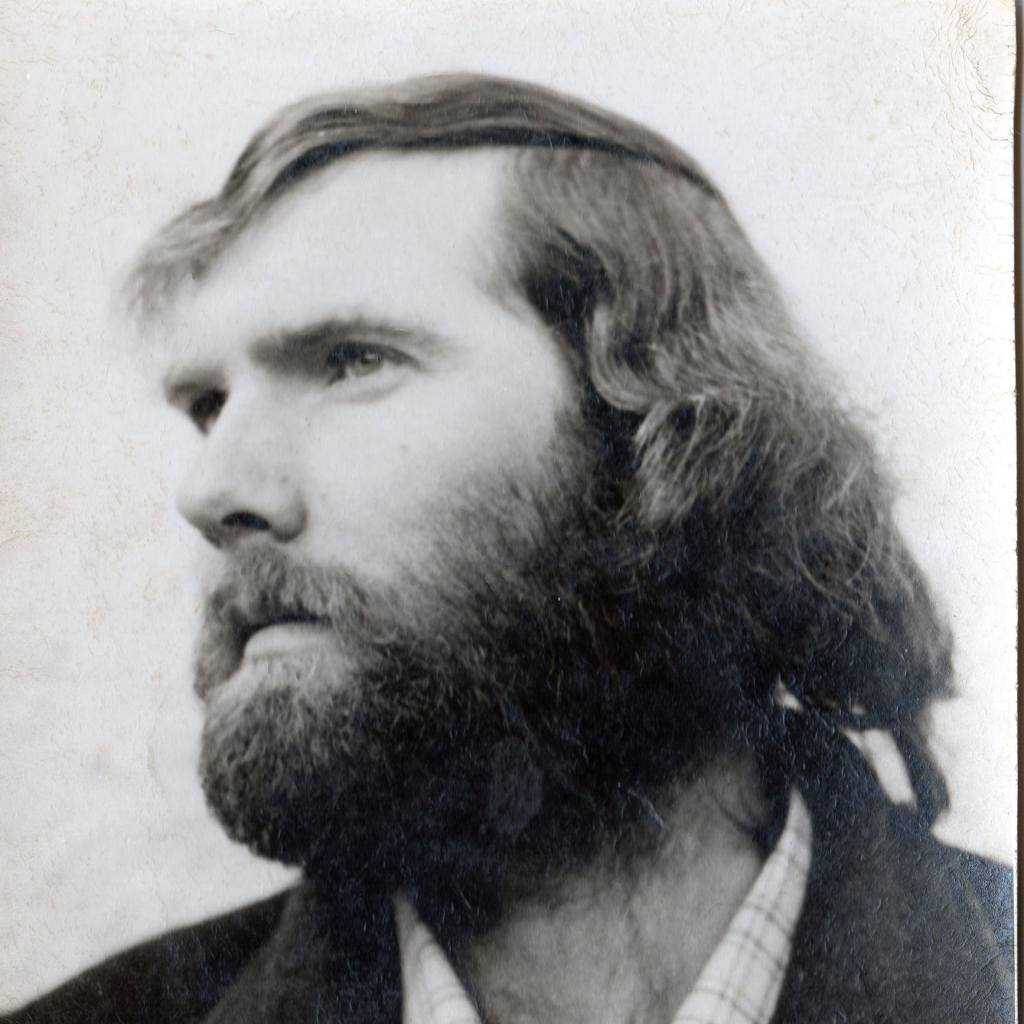
Oh dear – I’ll need to be careful here! In actual fact, one of the worst places to deliver was actually delivering to Barbara’s place, Trareoch Hotel because when she was busy always someone had the knack of coming down the road as I was coming up in the post van. And they couldn’t reverse and I don’t know how many times I didn’t get home for half an hour trying to get people out of the ditch while they were trying to reverse going back up the road. So eventually, it didn’t matter where they were, I’d just reverse back down to Marie Speir’s place because it was actually quicker. It happened on quite a few of the roads.
And one or two hairy moments delivering in the snow, especially up around Knockenkelly. One of the times I got to Broomhill and I was being very careful but the van started to slide and slid down past the first corner and then on down to the second corner and then stopped at a big hole in the road, a huge whole. And I was hoping that the van didn’t jump over the banking, you know. A couple of times when I had the land rover it was quite good because that could go anywhere. And I’ve seen me come down to Dave Warwick’s and the snow was maybe a foot or two deep and I went into four-wheel drive and pushed, and the snow would come right over.
Did you feel that the post must get through, whatever the weather?
Oh yes, I always delivered the post, even a couple of times when they changed from the land rover to Peugeot vans – they were quite good, but when it came to snow they just couldn’t cope with any incline. But you could reverse – I’ve seen me reversing all around by Knockenkelly delivering the mail and one time I parked the van at the bottom of the road and walked. I put it in a sack, but not the big parcels, and walked around to make sure they got it. The post office was good in the way of clothing – you got uniforms, you got footwear, boots, wellies, hats, scarves and gloves. But I didn’t wear the shorts – I think they are still in the drawer in the house somewhere.
Intermission
Start of Part 2
One time I went down to deliver mail at Sandbraes to Anne Hodge and normally she told me when she went on holiday but for some reason she didn’t this time. So I went down there and the storm doors were open, and I needed to get a signature, so I knocked on the door and of course there was no answer, so I went round the back – no answer so I thought that’s strange. So I managed to look in the window and here’s this, this what I thought was a person in the bed and the blankets drawn right up. So I champed on the thingmy and there was no answer so I thought ‘oh my goodness – is she dead?’ And I knew that Bobby and Jill Shand at Middlebank, they had a key, so I nipped up to Jill and Bobby’s and I said ‘I think something’s no right’ so Bobby come down with the key and here she had a giant teddy bear in the bed – what a relief, absolutely! Ha ha ha.
And another time I was coming down from Meadow bank and I met the late Mick Brodrick who was very friendly with Billy Connolly, he used to work in the shipyards and that, and, of course, Mick was like me – very tall and he had a big black beard like me and wearing a big coat, and he was absolutely sozzled. And he waved me down and he said ‘bleep, bleep -take that beard off, because people are handing me the bleeping mail to post’.
There was a film ‘The Missing Postman’ but I done a film as well. I done a film called The Journey of a Letter, it was for the BBC – it was an educational thing and it was shown in the school. And, of course, some of the kids when they came down, they said ‘Oh, that’s George the Post’ you know. Round about 1985 and I must ask Sandy McGovern, because she was the janitor then and I was wondering if there are any photos. I had a couple but I don’t know where they went to. I think it was posted in Glasgow and then it went in a van, then a train, then a van, then the ferry and then a van again to get sort and then in a van again to get delivered. So that’s a journey, if you think about it, just from Glasgow to Arran – the amount that the letter’s being handled.
I think the film was called ‘The Letter’
Yes, I went on YouTube and looked for ‘A Journey of a Letter’ but there’s loads and loads which have been done on different islands and different parts all over but I couldn’t get the one for Arran, you know.
To some people the job might have been boring because you were going round the same way every day, meeting the same people but I enjoyed it. Every day you went round the scenery was different, you would see different every day, you know, which was most enjoyable.
How often did you have to learn the names of new houses?
Och, you were a postman so it just clicked in – it was hard for somebody starting again, you know, a new postman but when I first started, the likes of one delivery, you only got three days to learn it. You know, some people now, they spend three weeks and they still don’t know it but that’s the way it is and there’s a lot more houses.
So, in your time, how many posties were there around the island?
Well, two for the South end, one for Whiting Bay, May Speirs doing the cycle route, Lamlash had a van as well and they had the two – Sal Bannatyne and Ruth Young, two women there and Brodick had three postmen. Then you had Lochranza, Shiskine – so there was quite a few… They all came to Brodick in the morning and the starting time was 8 o’clock. When I first started there was mail sorted here in Whiting Bay for May Spiers because she done the cycle route. Someone would nip through to Whiting Bay with her mail so she didn’t have an early start and it was basically already sorted. Although she had her pigeonholes for sorting to get it the way she wanted to do it. We all did our own sorting. But before I retired the postcodes became a real big thing and the machines in Glasgow could sort the postcodes into the likes of say from Mentone to Largiebeg. So you’d get that sectioned, you’d get that bundle so you would know in the frame…because there are only three postcodes for the whole village – 8RG to 8RJ. It’s all sorted in Glasgow now, Sighthill, even though the postcode is Kilmarnock. When I was with the Post Office it was Kilmarnock but not now.
Then you had that time when they changed the ferries and the mail came in on a fishing boat at Lochranza and that was – I actually refused to go and collect the mail because you had to stand on the beach or the slipway and they had to throw the stuff from a dinghy and I thought I’m not going on to the shore. If that was today the Health and Safety wouldn’t allow it. And sometimes you were bringing the mail back because you were starting so late in the day that it was 11 o’clock, 12 o’clock at night sometimes. So people wouldn’t open their doors or they were locked up. So that would have been us from eight in the morning until eight at night, at least.So that came to a head when the late Alice Lennox got caught in a snowdrift on the top of The String and got stuck. So her husband, Jim, he was on tenterhooks – he was wondering what had happened to her and eventually they sent a search-party out and there she was so the Post Office had no alternative but to change it.
Then they had a wee bit when it came in on a helicopter for a while and then it came into Brodick in a fishing boat.
What happens with posties now when it’s a day when no post comes in?
They won’t have to turn up but they won’t get paid, so if they’re over their time the Post Office calls it swings and roundabouts now. Sometimes you’ll be getting double mail some of the days because it can’t be delivered. So if the boat can’t come there’ll be mail from the mainland sitting waiting over the other side, so the postmen will have a heavy day that next day but because they’ve had a day off the day before they won’t get paid. It’s all changed now. Once you’ve privatised something it’s all about profit, it’s not about the service – it’s all about making money. It’s a shame because the Post Office – it was such a lovely job.
Did you ever get a dog bite?
Oh wow! One or two….I remember Dr Macleod’s dog bit me – a lovely dog, and I don’t know why – you could pat it every day and he’d get his biscuit and this time it bit me. Just as well it was the doctor’s because the next minute I looked at the back of my hand and it was the size of a tennis ball. I had to go and get an injection. And then Sheila Douglas’s dog, a lovely spaniel, again didn’t usually bite but I was going up the drive and it bit me right on the bum.
Plenty of dog bites, Peter R—–, – his mother and father came to stay at Viewbank. It was a gold-coloured spaniel and you just sense…I said to him ‘Peter, I think that dog..’ and he said ‘Oh no – it doesn’t bite’. Well, I was half-way down the drive and my hand was down and the next thing it latched on to my finger so he had to put a box out for two or three weeks. I refused to deliver his mail and he wasn’t too happy about it. And the lady at Silverhill who used to foster the kids, she had two collies and they were absolutely vicious. One of them came right out through the glass door one time to the coalman, I think it was Fraser who takes the photos now – I’m sure it was Fraser, he came right out through the glass panel. Anyway, one day I had to get a signature and I told her ‘don’t let the dogs out, don’t let them out’ and what did she do? She opened the door and let the dogs out and one bit me on the back of the leg and it bit me on the side of the leg. I was a terrible mess – I had to go to the hospital right away and get extra injections. And then eventually her father kept one of the dogs and he kept letting it out so I refused to deliver his mail so the Post Office wrote to him and made him put a box outside, and he wasn’t happy about it. That was just a few but over the years it must have been dozens but it comes with the territory. But it still happens, you know.
If it needed a signature, you used to sign for us yourself, didn’t you?
Yes, people used to say to me ‘You sign it for me’ and that might still go on because you see on Facebook people asking if anyone has seen their parcel, so someone must have signed for those.
Barbara: At Arran Deliveries they have to sign for it as that’s the end of the contract as far as the mainland delivery companies are concerned and then it gets brought to the house, so they don’t acknowledge the second part of the signing. You get a message saying it’s been delivered, as far as Arran Deliveries.
George: But what happens is that it’s not actually delivered it’s just delivered to them (Arran Deliveries).
What’s the strangest thing you’ve ever delivered?
I don’t think there’s anything. I remember H—– D—–and Helen, his missus. I had to deliver a packet to Helen, a small box. Anyway, a week or so later I had to deliver another one exactly like it and she looked at it and she said’ Oh God, not another vibrator!’ Lots of laughter.. I didn’t ask her…
I suppose you get to know what everyone’s buying. You know, here you are – here’s more screws
I had the police in a few times because you know, you could smell it. We had things confiscated a few times. I don’t want to give away too many secrets.
Any other questions for George?
Quite a few times the letters would be very badly addressed and the postmen would go out of their way to deliver them. I remember one time I got ‘two ladies in a tent at King’s Cross’ and I found them – quite a lot of things like that. And another time it was a letter from a family who didn’t know the address so put a wee drawing of the Youth Hostel. The postman hated to get beat. And quite often I’d get children from holiday homes who would write on the envelope ‘Hello George’, you know. They’d write a wee message for me. And yes, occasionally I did read postcards – wee Jimmy’s still misbehaving, something like that, you know. So, all in all, I thoroughly enjoyed my time as a postman.
THANKS VERY MUCH, GEORGE – that was very interesting.
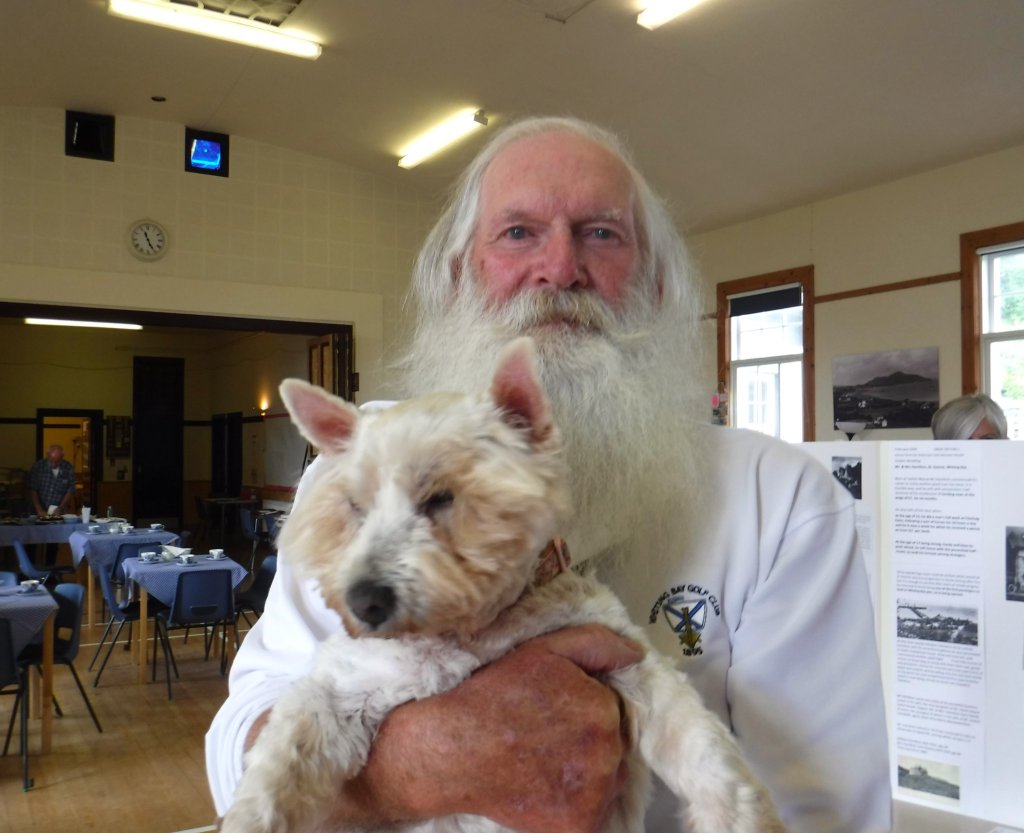
Transcribed by Cheryl Burgess for Whiting Bay Memories Heritage Tales and Trails project 2023 -2024
 Whiting Bay Memories